
 English


 Published: November 28, 2025
 Editor: Qingyu
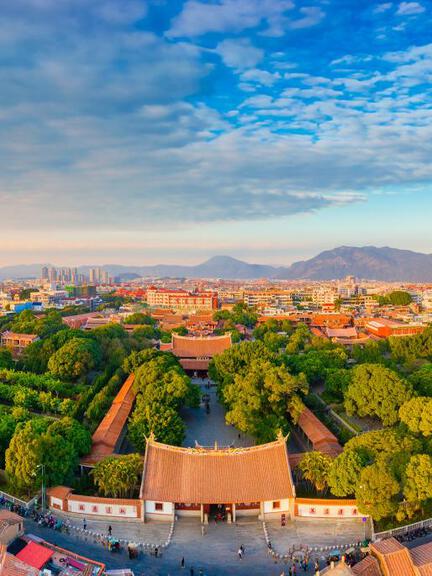
Quanzhou was one of the starting points of the Maritime Silk Road. From the 10th to the 14th century, it flourished through vibrant international maritime trade, becoming a bustling hub where merchants from many lands converged and diverse cultures interacted, earning it the reputation as the “Largest Oriental Port” of its age.
“Quanzhou: Emporium of the World in Song-Yuan China” comprises a series of cultural properties which date back to that period and still shine. These sites are distributed throughout the Quanzhou Bay region, with today’s urban core as their center.
Heritage Showcase
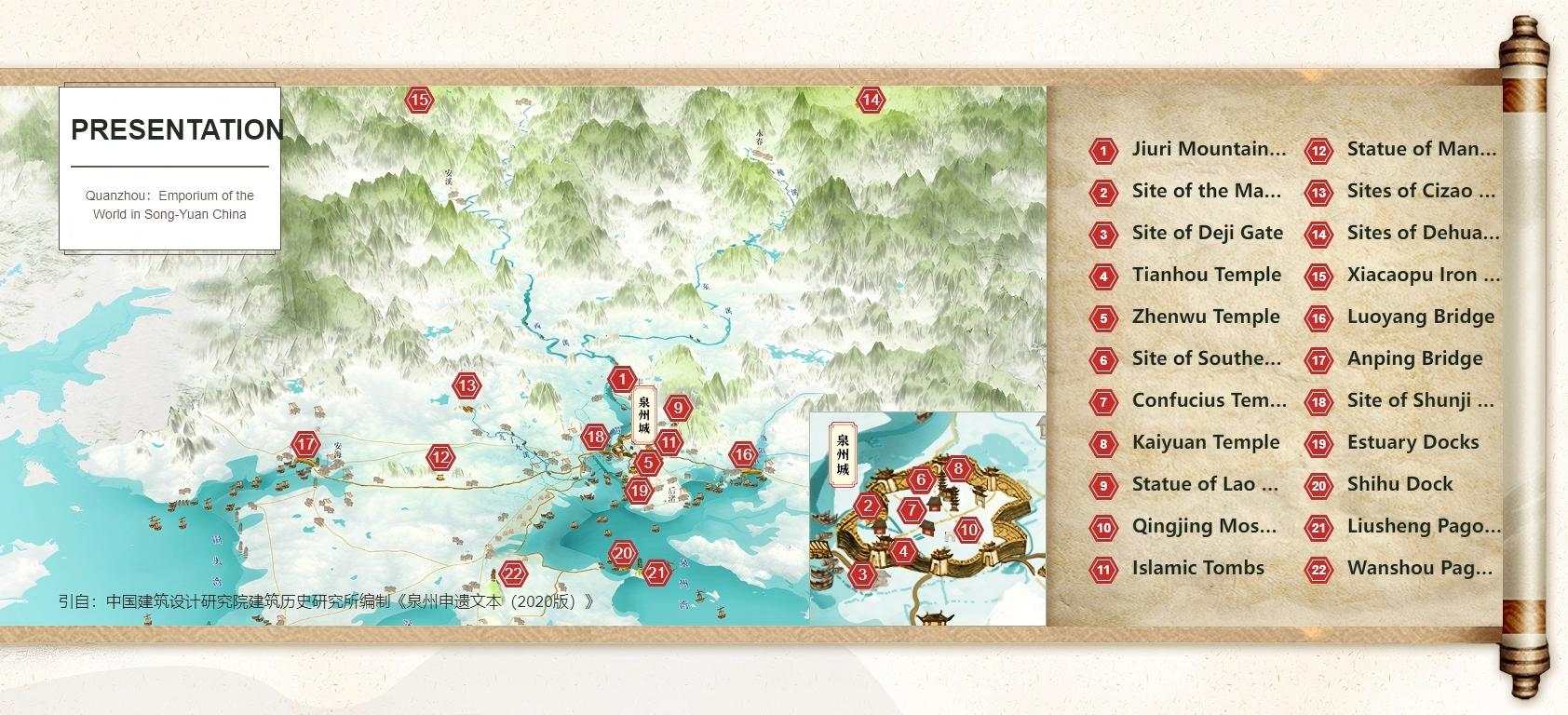
Image: Official website of “Quanzhou: Emporium of the World in Song-Yuan China”
Suggested Itineraries
Route 1: Jiuri Mountain Wind-Praying Inscriptions → Qingyuan Mountain & Stone Statue of Lao Tze → Islamic Tombs → Luoyang Bridge → Estuary Wharf → Zhenwu Temple
Featured Sites
Jiuri Mountain Wind-Praying Inscriptions
These cliff inscriptions record official rituals performed during the Song dynasty to pray for favorable winds for maritime voyages. They form the largest existing group of wind-praying inscriptions in China.
Luoyang Bridge
The earliest surviving cross-sea beam-style stone bridge in China, it once served as a major transportation link connecting Quanzhou with Fuzhou and the vast inland regions beyond.
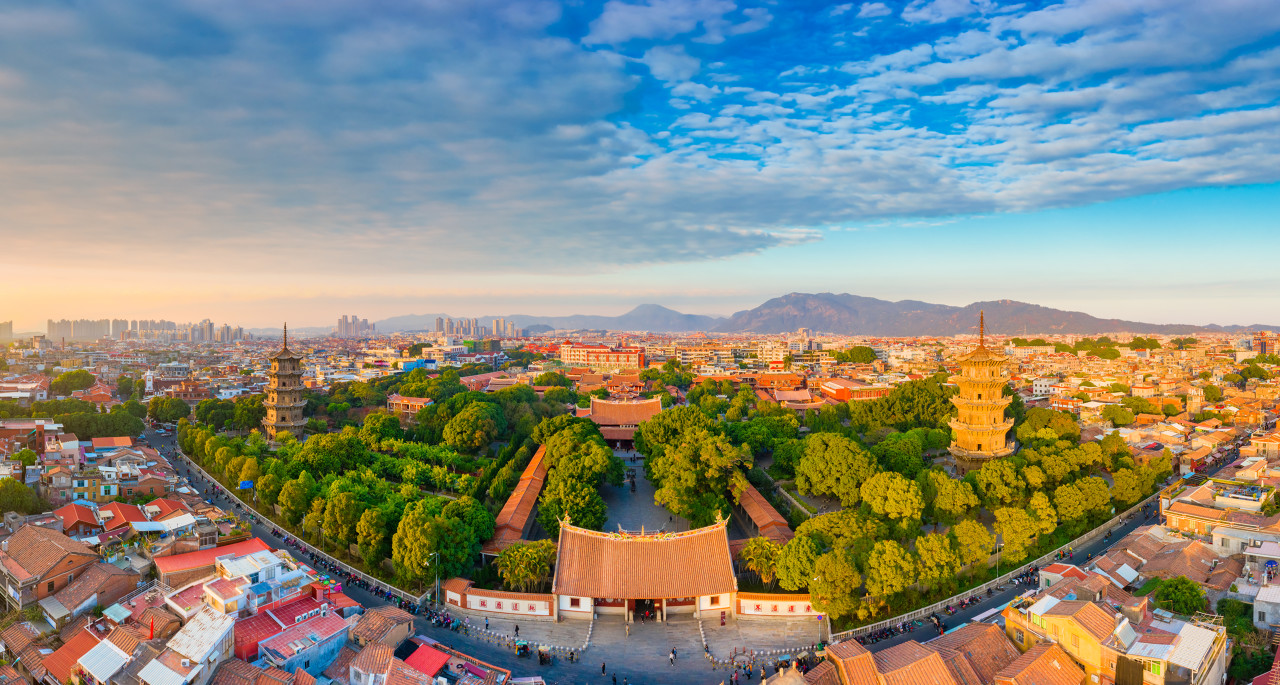
Route 2: Kaiyuan Temple (The East and West Pagodas) → Site of Southern Clan Office → Confucian Temple → Qingjing Mosque → Site of the Maritime Trade Office → Tianhou Temple → Site of Deji Gate → Site of Shunji Bridge
Featured Sites
Quanzhou Kaiyuan Temple
The largest and most prominent Buddhist temple in Quanzhou during the Song and Yuan periods, and today the largest surviving Buddhist temple complex in Fujian Province.
Site of Maritime Trade Office
Established in 1087, this government office oversaw maritime trade in Quanzhou during the Song and Yuan dynasties. Its presence marked Quanzhou’s official status as an open national port for foreign trade.
Route 3: Wanshou Pagoda → Liusheng Pagoda → Shihu Dock → Statue of Mani in Cao’an Temple → Anping Bridge → Cizao Kilns → Dehua Kilns → Iron Production Site
Featured Sites
Wanshou Pagoda
Rising above Quanzhou Bay, the Wanshou Pagoda was a well-known navigational landmark during the Song and Yuan periods and stood as a symbolic beacon of the port.
Anping Bridge
Anping Bridge is the longest surviving cross-sea beam-style stone bridge in China.