
 English


 Published: November 27, 2025
 Editor: Yang Shuo
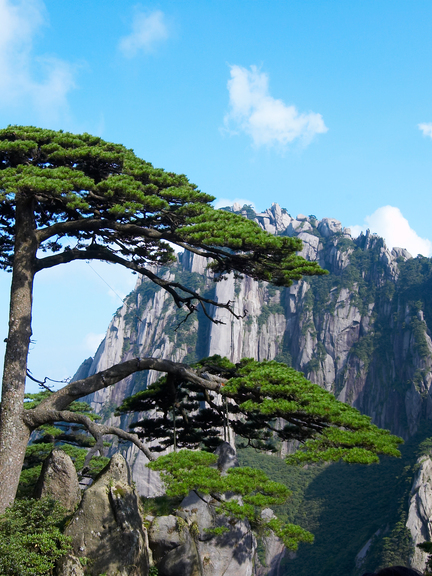
Nestled in Huangshan city, southern Anhui province, Mount Huangshan holds UNESCO distinctions as both a World Cultural and Natural Heritage site and a national 5A-level tourist destination. Renowned for its "Five Legendary Wonders"—fantastic pines, grotesque rocks, sea of clouds, hot springs, and winter snow—this storied landscape has captivated travelers for centuries. The Ming Dynasty explorer Xu Xiake(1587-1641), who visited the mountain twice, wrote: "Across the four seas and beyond, no mountain compares to Huizhou's Huangshan! Having climbed Huangshan, no other peaks remain worthy; the view here surpasses all!" Later generations condensed this admiration into a popular proverb: "Once you have visited the Five Sacred Mountains, there is no need to visit any others; after experiencing Mount Huangshan, there is no need to see even the Sacred Mountains."
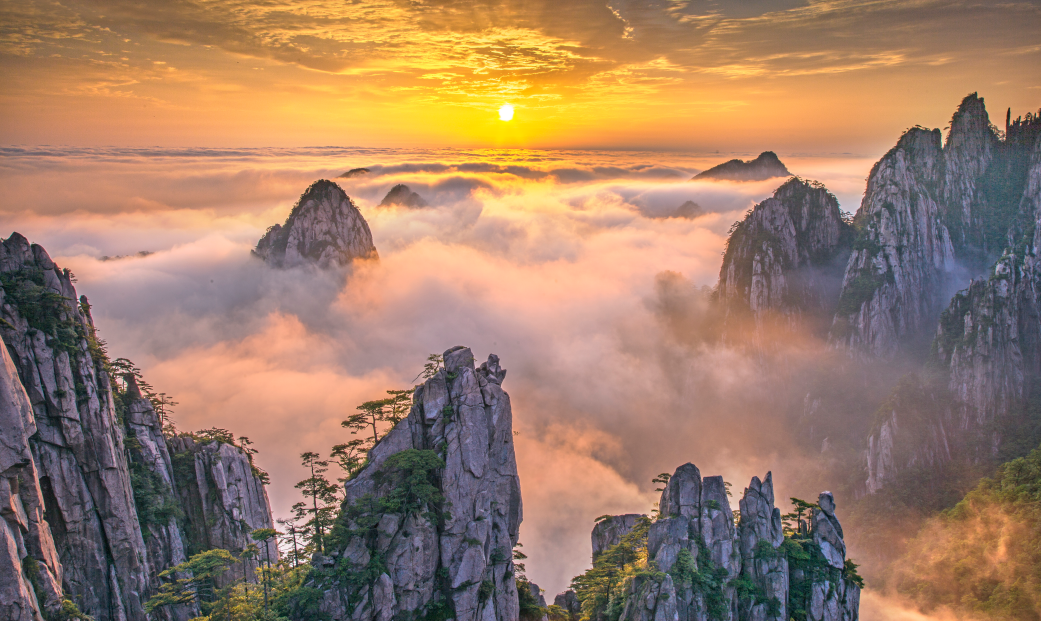
Five wonders of Mount Huangshan
1. Fantastic pines
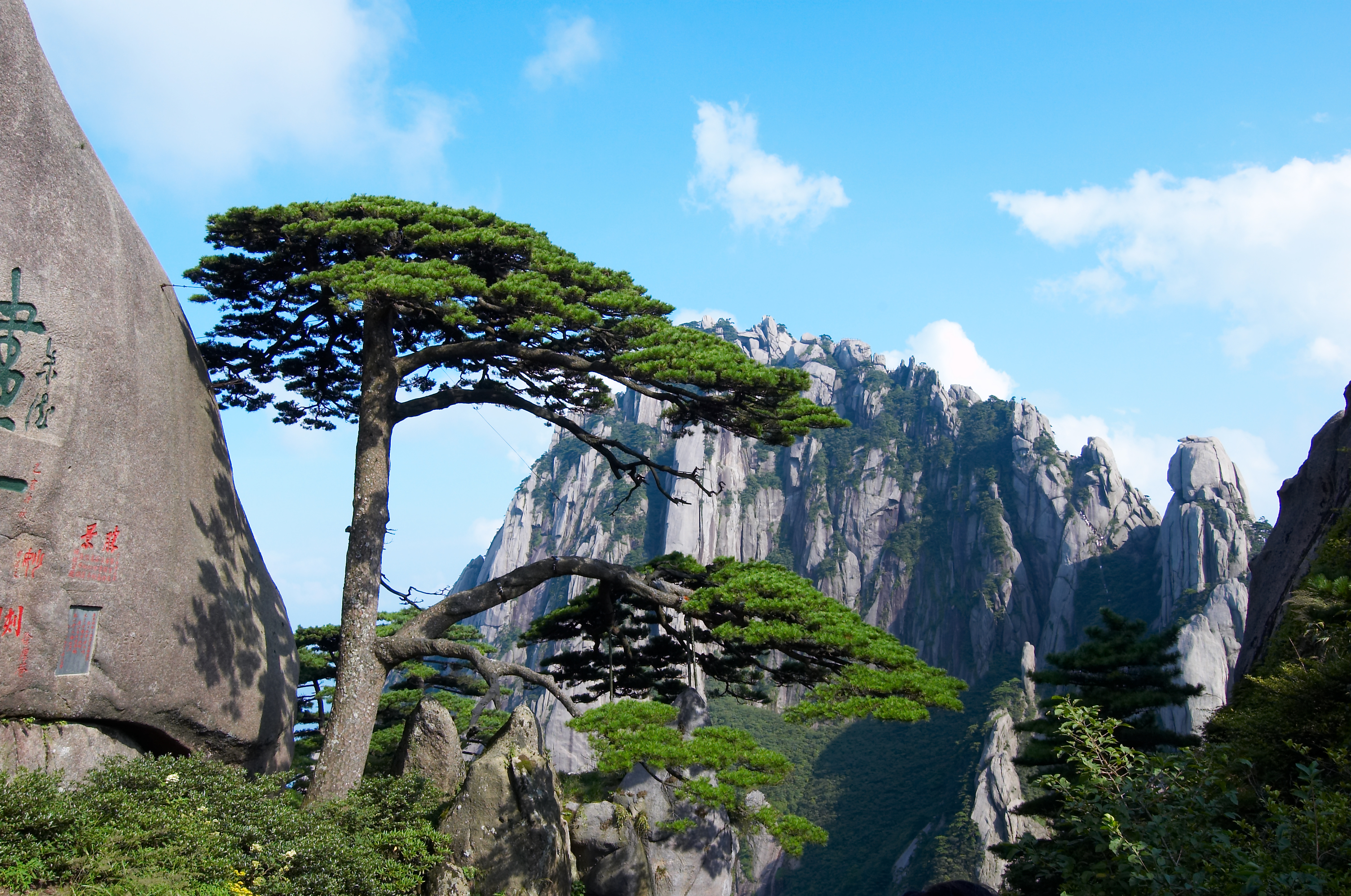
Mount Huangshan's uniquely shaped pines display extraordinary variety, including the iconic Guest-greeting Pine, Sea-exploring Pine, Crouching Dragon Pine, and Glazed Pine. The Guest-greeting Pine is the most emblematic—its horizontally extended branches resemble a welcoming host, embodying Chinese cultural virtues of hospitality and inclusivity.
2. Grotesque rocks
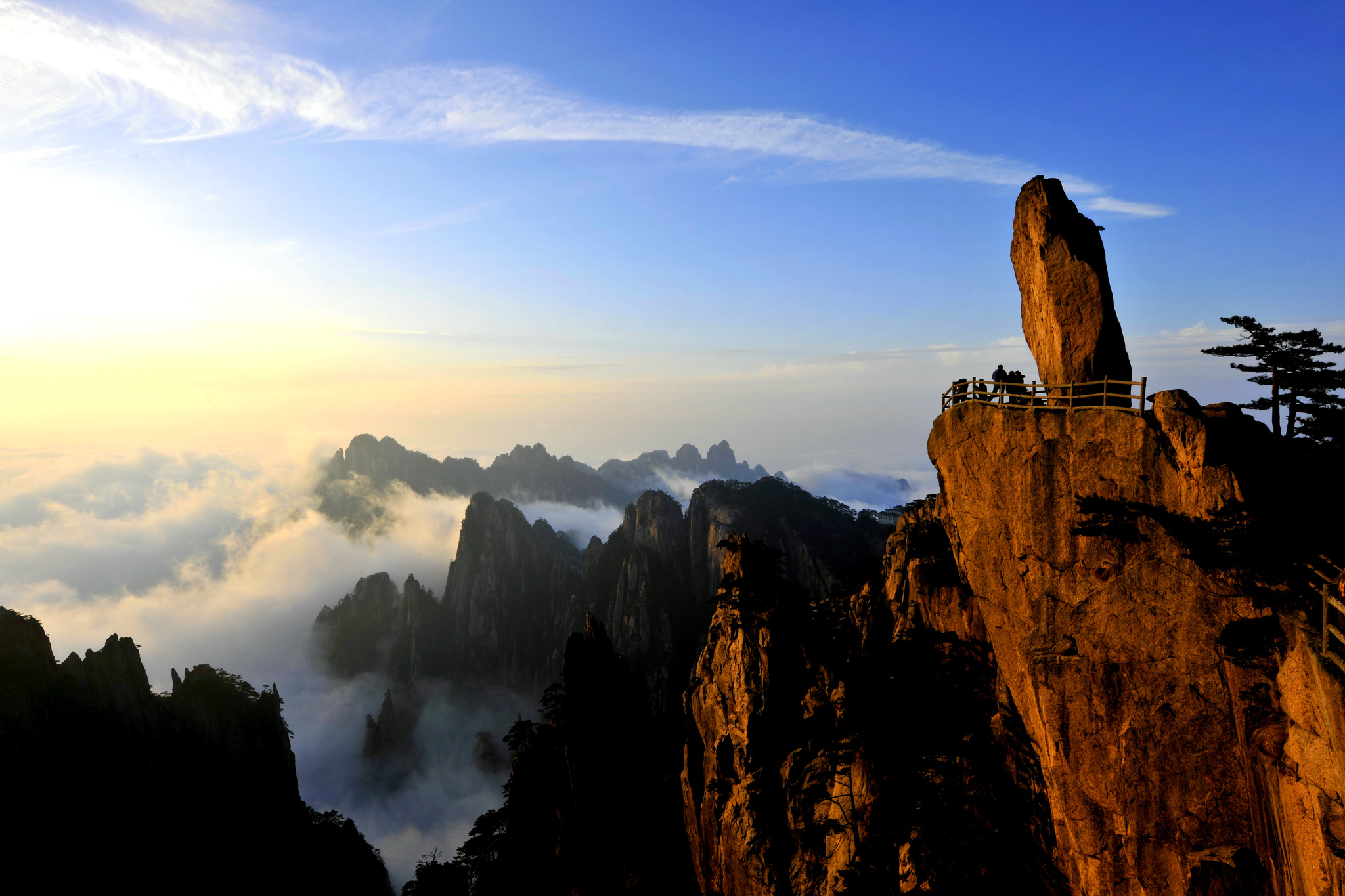
The mountain's surreal rock formations create an endlessly intriguing topography. Some formations mimic creatures ("Monkey Gazing at the Ocean," "Eagle Seizing Prey"), while others suggest human figures ("Immortal Sun-Drying Boots," "Eighteen Arhats Pilgrimaging Southward"). Beyond their striking resemblances, these geological wonders carry centuries of folklore.
3. The sea of clouds
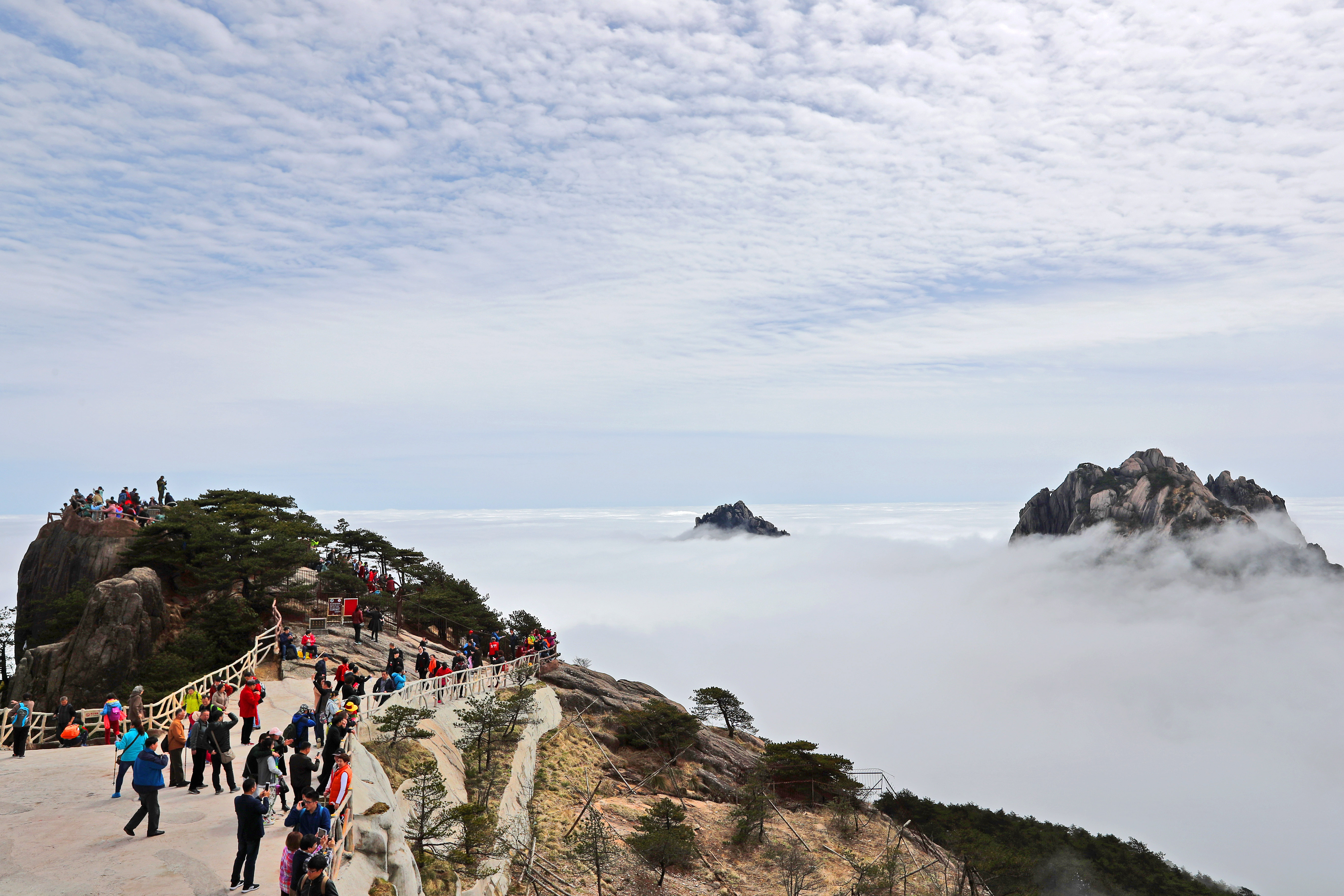
Huangshan's sea of clouds offers an ever-changing spectacle. These cloud formations are traditionally categorized into five seas: East, South, West, North, and the Heavenly Sea. Prime viewing spots include Shixin Peak (North Sea), Yuping Tower (South Sea), Paiyun Pavilion (West Sea), Baige Ridge (East Sea), and Bright Summit Peak (Heavenly Sea), each revealing distinct atmospheric effects.
4. Hot springs
Historically known as Tangquan, Huangshan's hot springs emerge at the base of Zishi Peak. Noted for their clarity, these waters are suitable for drinking and bathing, and they maintain flow even during prolonged dry periods.
5. Winter snow
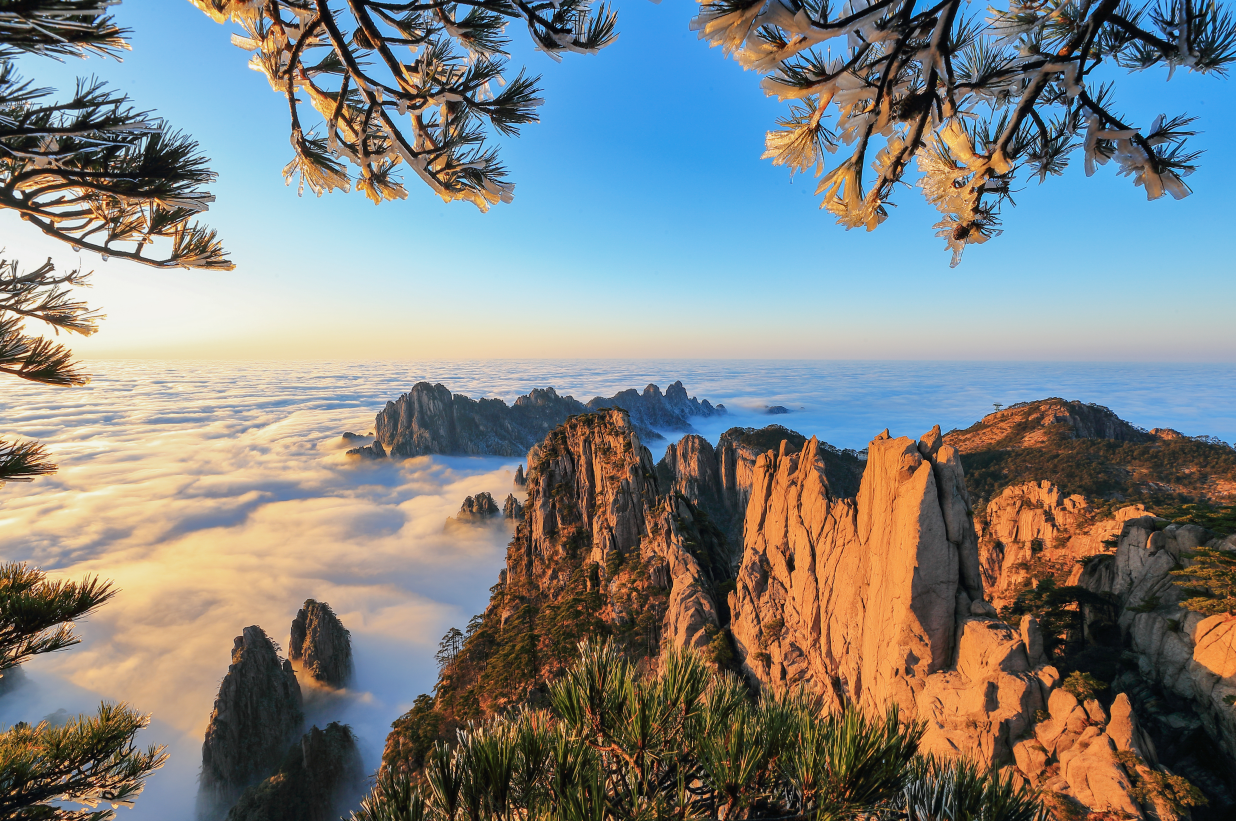
Huangshan's winter snowfall creates striking "northern-style landscapes in southern China." As snowflakes fall, the mountain is transformed into an otherworldly, fairy-tale realm.
Ticket information
Coverage: Admission to all scenic areas within Mount Huangshan (excludes shuttle buses and cable cars)
Validity: Same-day entry. After initial verification, visitors may re-enter within three days.
Access points: Yungu Temple, Ciguang Pavilion, Songgu Monastery, Diaoqiao Bridge entrances.