 English


 Published: February 10, 2026
 Editor: Xinxin
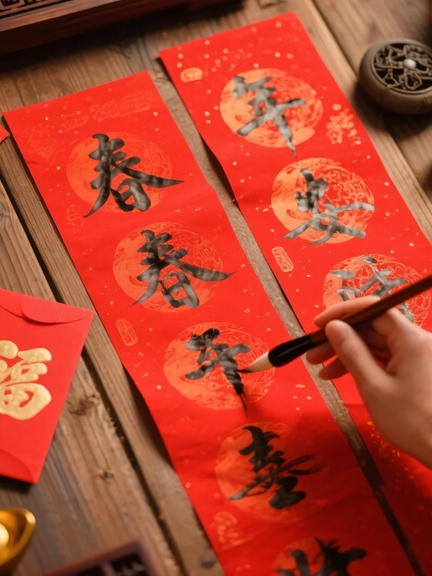
Spring Festival couplets, also known as "peach wood charms," "spring scrolls," "door couplets," or simply "couplets," are traditional decorations commonly displayed during the Chinese New Year. They are typically written on red paper, with characters in gold or black ink.
Spring couplets are characterized by their balanced antithetical structure and rich symbolic meaning, with five-character and seven-character couplets being the most common forms. A complete set of spring couplets usually consists of an upper scroll, a lower scroll, and a horizontal inscription. The upper and lower lines must have the same number of characters, mirror each other in structure, follow harmonious tonal patterns, and be linked in both form and meaning.
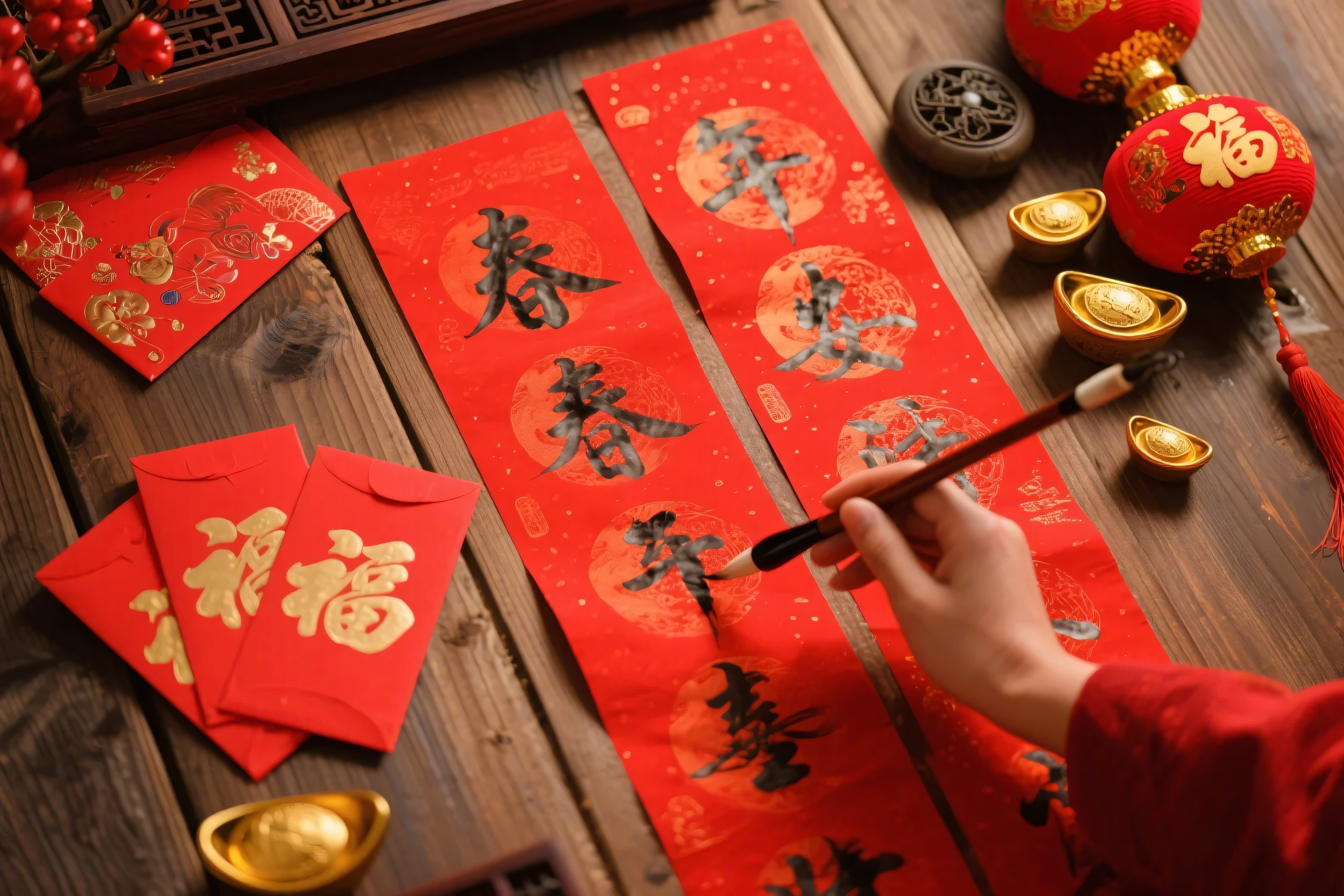
Spring couplets are not only a form of literary art, but also a vital medium for cultural heritage, through which the art of calligraphy is fully displayed. Furthermore, their content widely encompasses historical allusions, poetry, songs, and folk tales. The couplet tradition, to which spring couplets belong, was officially inscribed on the first batch of the National Intangible Cultural Heritage List with the approval of the State Council on May 20, 2006.
Origin Story
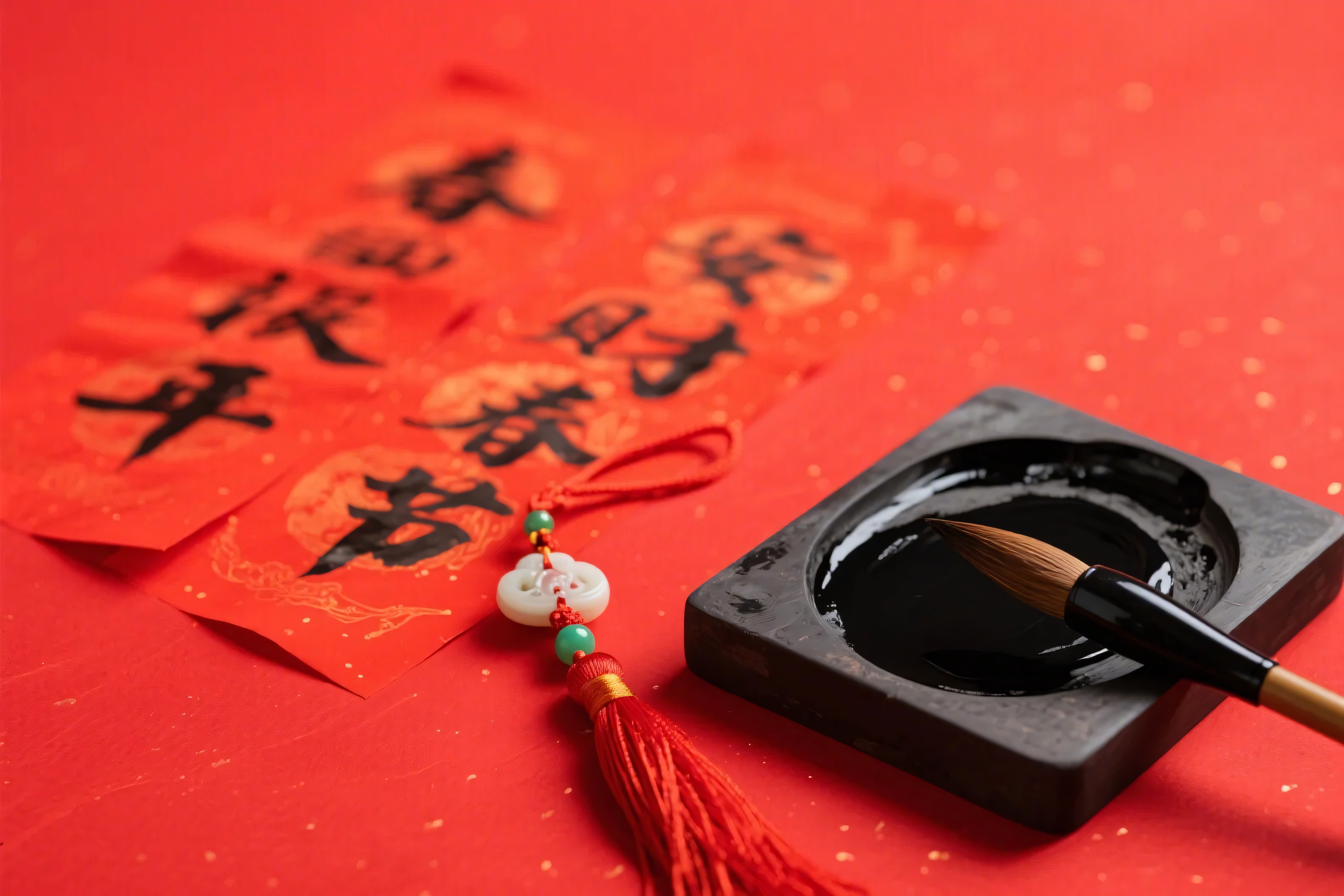
The Chinese custom of pasting spring couplets can be traced back to the practice of hanging peach wood charms. During the Later Shu period (934-965 CE) of the Five Dynasties (907-979 CE), the earliest spring couplets emerged in China. In the Song Dynasty (960-1279 CE), posting spring couplets gradually became popular, becoming one of the major festive activities during the Spring Festival. By the Ming Dynasty (1368-1644 CE), writing couplets on red paper became the most common practice. Writing on red paper was not only simple and convenient but also created a festive atmosphere and reflected people's aspirations for a better life, thus contributing to the widespread adoption of spring couplets.
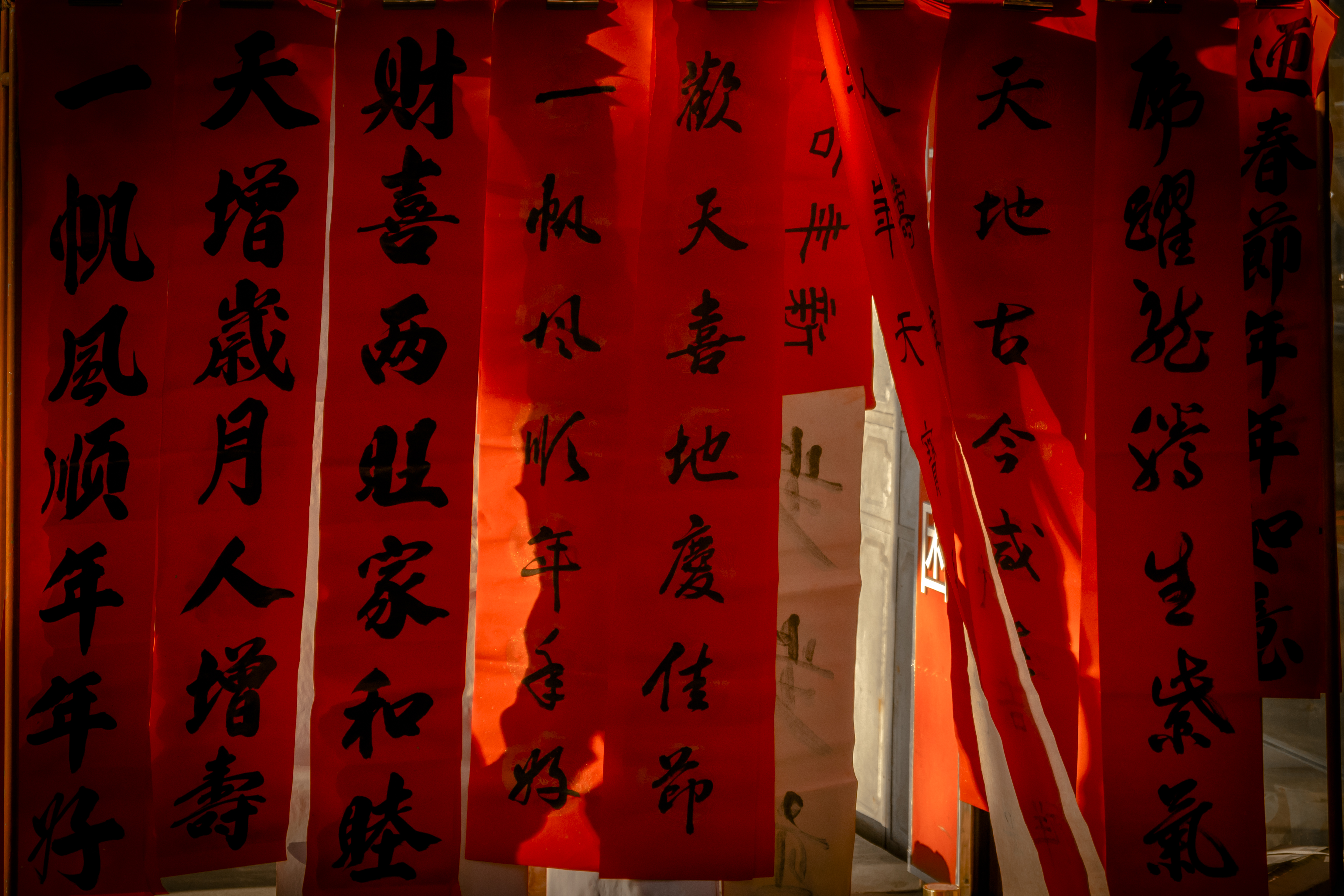
Regarding the tradition of pasting spring couplets for the New Year, there is a popular legend related to a monster called "Nian." It is said that in ancient times, there was a monster named "Nian" that would emerge during the New Year's Eve to wreck havoc. Later, people discovered that it was afraid of the color red and loud explosive sounds, which led to the customs of setting off firecrackers and pasting red spring couplets during the New Year, in order to scare the monster away.
Beautiful Symbolism
Spring couplets carry people's good wishes for the New Year as they bid farewell to the old and usher in the new. They convey longing for a better life through concise yet meaningful words. When writing spring couplets, elements drawn from everyday life are often used to praise life and the coming of spring, with the aim of expressing admiration for spring and anticipation of happiness. Many modern spring couplets also use natural scenery or animals to convey joy at the arrival of New Year, expressing a sense of closeness to and love for nature.