
 English



 Published: November 28, 2025
 Editor: Qingyu
The Potala Palace, the largest and best-preserved ancient palace-fortress complex in Xizang, stands as a remarkable testament to traditional Xizang's architecture, characterized by its distinctive earth-, stone-, and timber-based structures and fortress-style towers. Perched atop a mountain, it was designed according to the Buddhist mandala layout, covering an area of 13,802 square meters, with its main structures soaring 115.703 meters high. Spanning 13 centuries of construction history, the palace's architecture and the cultural artifacts housed within provide compelling evidence of the long-standing political, economic, and cultural exchanges and integration among China's diverse ethnic groups.

Selected Artifacts
Cracked-glazed Celadon Double-Eared Vase with a Powdery Blue Glaze
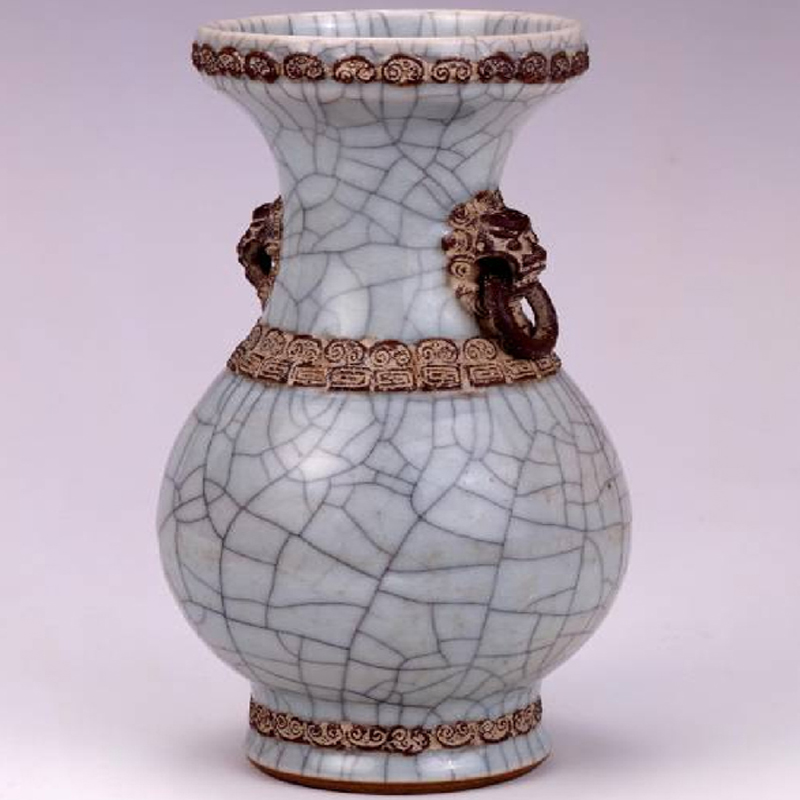
Age: 18th–19th Century.
Dimensions: Height 24.2 cm; Mouth Diameter 11.8 cm; Base Diameter 8.2 cm.
Crackle-glazed porcelain, also known as "yaobian" (kiln-transmutation) ware, refers to pieces retrieved from the kiln exhibiting striking, anomalous variations in color, form, sound, or texture after firing. Such effects appear without identifiable causes and are largely impossible to reproduce consistently in production, hence the name "kiln transmutation."
Blue and White Porcelain Plate with Pavilion, Flower, and Bamboo Patterns
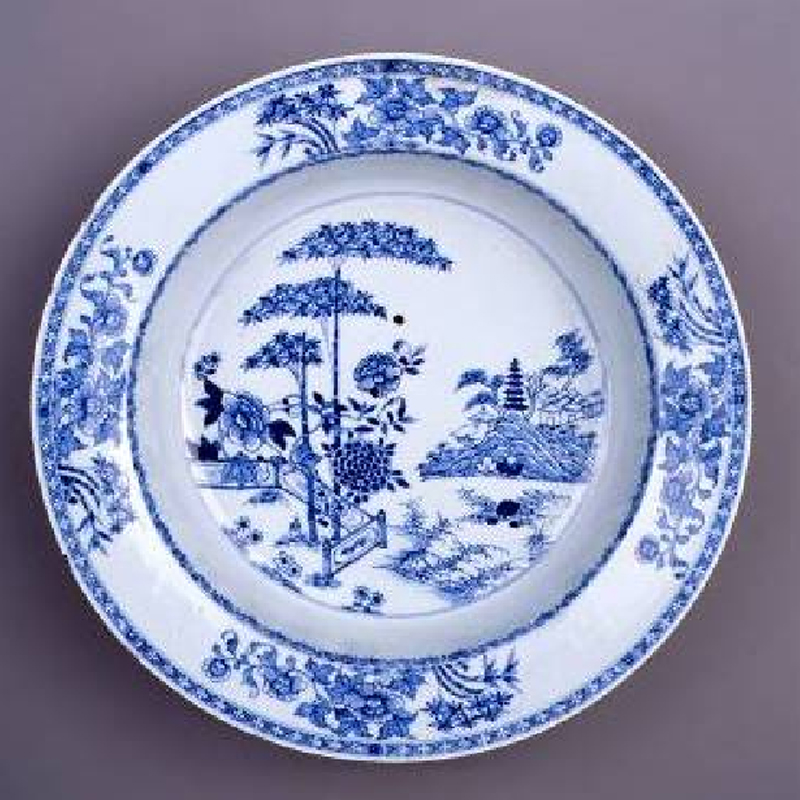
Age: 18th Century.
Dimensions: Height 7.8 cm; Mouth Diameter 39 cm; Base Diameter 23.5 cm.
The plate is circular with a molded rim, a deep bowl, and a flat foot. Adorning the inner surface is an underglaze blue depiction of terraces, towers, landscape elements, and flowering plants, notably peonies and verdant bamboo. The intense, deep blue pigment ("qinghua") lends a sense of tranquility to the scene. The depiction of far-off hills and proximate water creates a stunning and unusual landscape vista. Given its stately form, this dish is classified as a piece of export ceramic ware.
Yongzheng Doucai Vase with Twining Lotus and Hidden Eight Immortals on a Celestial Sphere Bottle
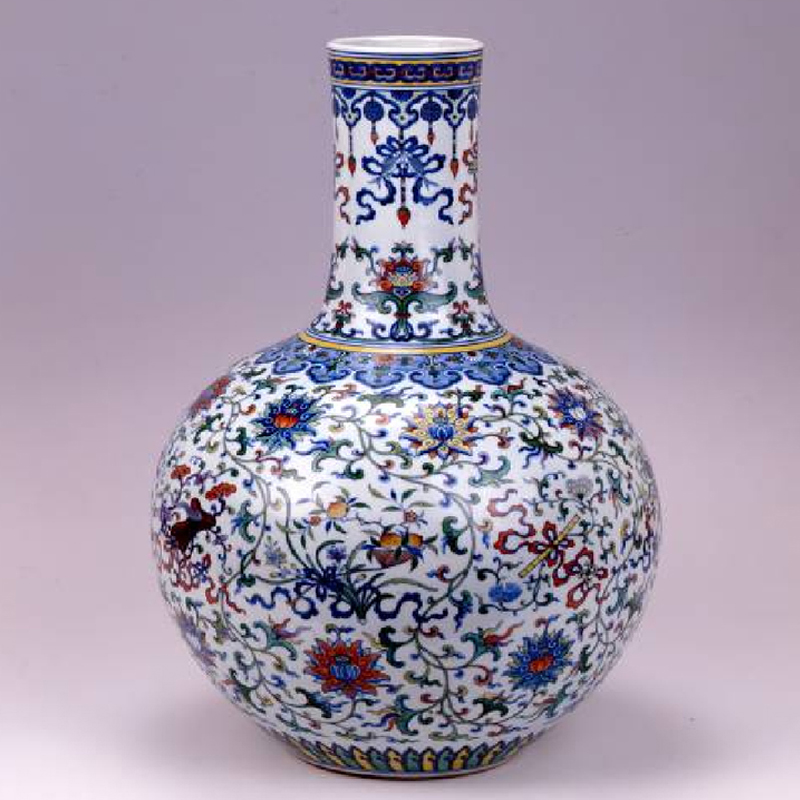
Age: Yongzheng Period, Qing Dynasty (1723–1735).
Dimensions: Height 58 cm; Mouth Diameter 12 cm; Base Diameter 18 cm.
The vase is shaped with an upright mouth, an extended neck, a spherical belly, and a flat bottom. Its surface is comprehensively decorated in "Doucai" enamels with interconnected lotus scrolls holding the Hidden Eight Immortals' Symbols. The neck section showcases "Yingluo" (garland) patterns, and a band of cobalt blue "Ruyi" motifs encircles the shoulder. The base, which is unglazed, is inscribed with the six-character, three-column "kaishu" mark: "Da Qing Yong Zheng Nian Zhi" (Made in the Great Qing Dynasty under the Yongzheng Reign). This vase is truly remarkable, distinguished by its impressive scale, refined decorative execution, compact paste, and lustrous, brilliant glaze. The eight concealed emblems are the respective implements carried by the Eight Immortals: Li Tieguai, Zhongli Quan, Lan Caihe, Zhang Guolao, He Xiangu, Lyu Dongbin, Han Xiangzi, and Cao Guojiu.
Opening Hours
Opening Time: 9:00 AM
Closing Time: 3:30 PM
Ticketing Information
Tickets must be booked at least ten days in advance via the mini-program. On-site visitors are also required to book tickets at least one day ahead. The Potala Palace does not offer same-day ticket purchases. All visitors must book tickets under their real names and undergo facial recognition. Reservations should be made in advance of the intended visit. Visitors eligible for discounted tickets may purchase half-price admission upon presenting valid identification.