
 English


 Published: December 25, 2025
 Editor: Cao Xuewen
Nestled on the southern foothills of Mount Huangshan and the southern edge of the Yixian Basin, Xidi Village covers 10.7 square kilometers. Founded in 1047 during the Huangyou period of the Northern Song Dynasty, it prospered in the mid‑Jingtai period of the Ming Dynasty (1368–1644) and reached its zenith in the early Qing Dynasty (1644–1911).
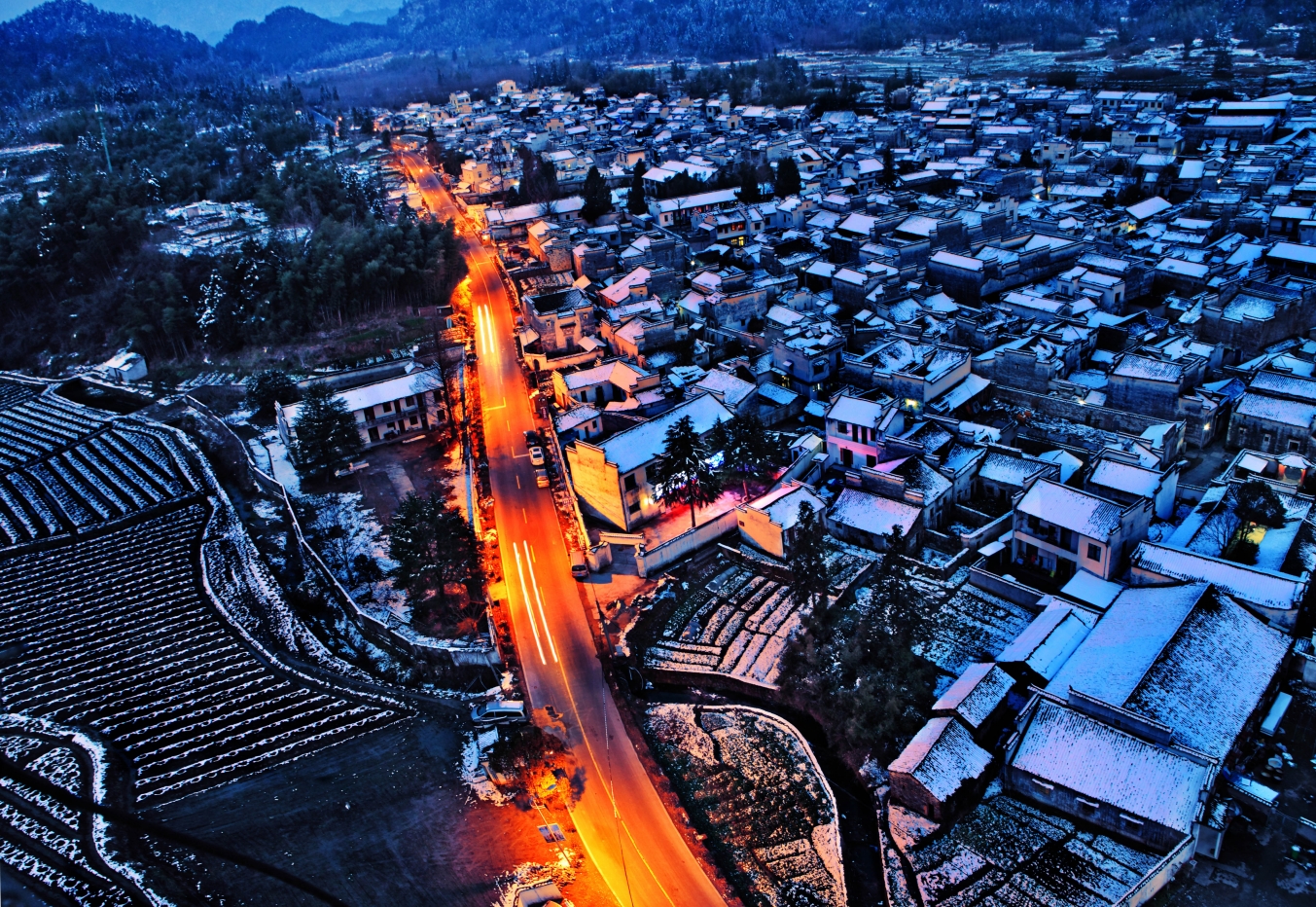
Encircled by rolling hills and picturesque landscapes, the village preserves nearly 300 residential buildings from the Ming and Qing dynasties, 88 ancient bridges, and 99 historic lanes—earning it the poetic name "A Hidden Retreat in the Peach Blossom Land."

Shaped like a boat and embraced by mountains, Xidi is bisected by two clear streams. Its layout centers on a main north–south street and two roads along the waterways, creating an orderly network of lanes that extend eastward and branch north and south. Flagstone paths of local bluestone wind between elegant timber‑framed houses adorned with intricate wood, stone, and brick carvings. With its harmonious spatial planning of lanes and buildings and restrained color palette, Xidi is a masterpiece of Huizhou-style architecture.
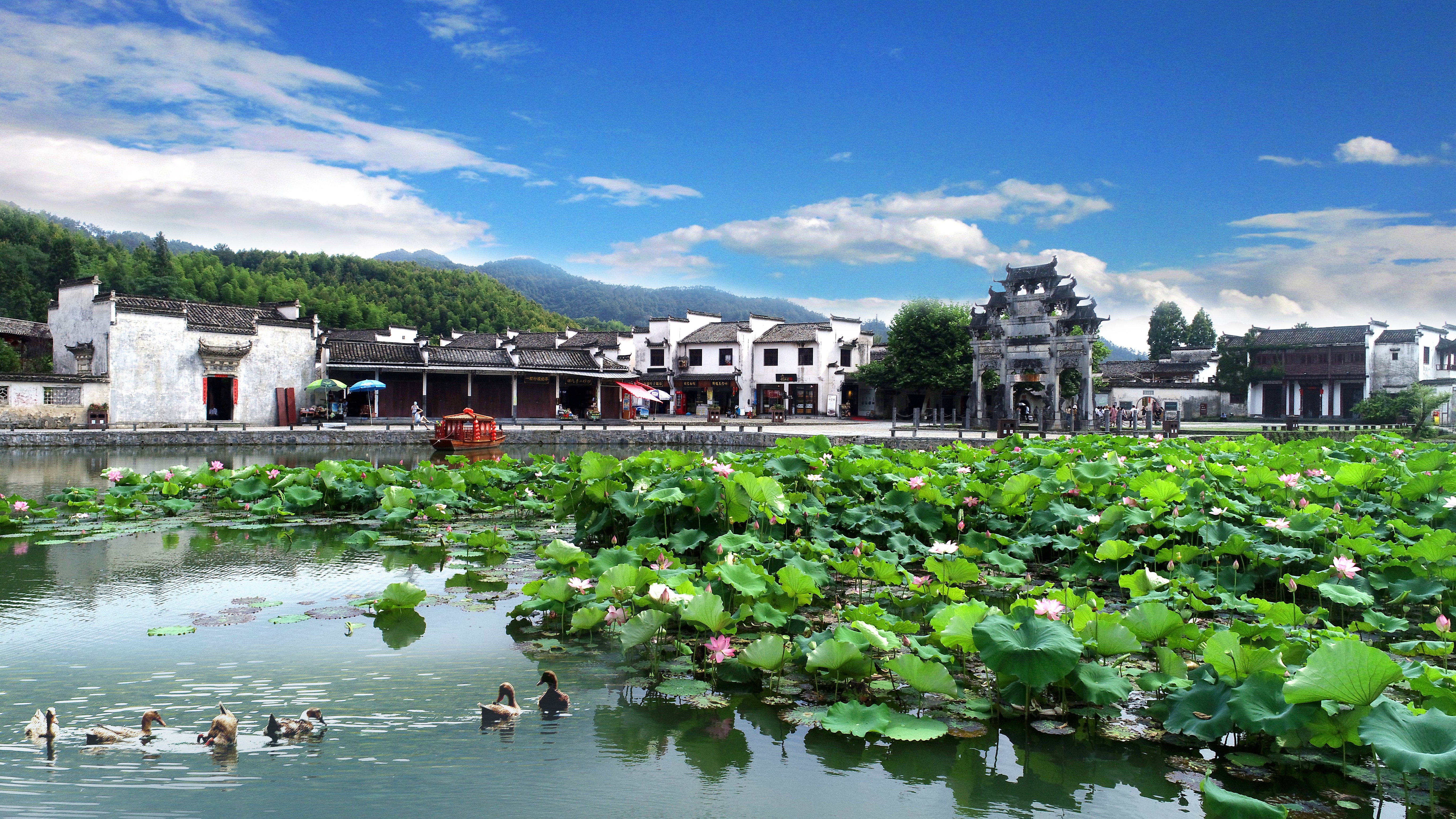
Lotus in summer in Xidi Village
In 2000, Xidi Village was inscribed on the UNESCO World Heritage List as a representative example of Ancient Villages in Southern Anhui. In December 2021, it was named "Best Tourism Village" by the World Tourism Organization (UN Tourism).
The village hosts a wide range of cultural and tourism events. A highlight is the Intangible Cultural Heritage wooden-bench dragon dance, in which villagers and visitors lead a long dragon formation through the historic lanes. During the lantern parade, the soft glow of traditional lanterns illuminates ancient streets, evoking scenes of "lantern‑lit streets and markets" from historic Huizhou. The "Legend of Xidi" light show adds a modern flourish: a golden dragon appears to leap from a water screen, mirroring the wooden-bench dragon in a spectacular fusion of light, water, and tradition.