
 English


 Published: November 28, 2025
 Editor: Xiaoyu
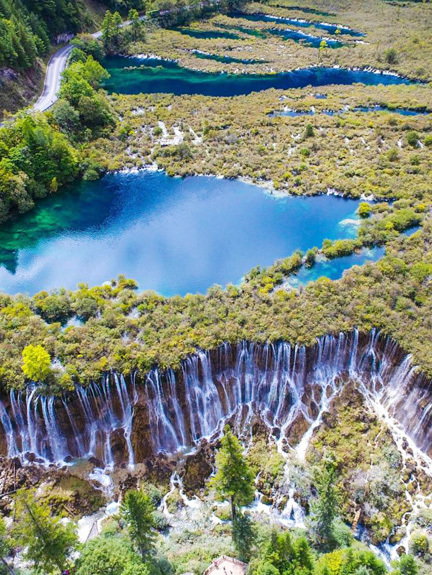
Located in Nanping county, Aba Tibetan and Qiang autonomous prefecture in southwestern China's Sichuan province, Jiuzhaigou Valley Scenic and Historic Interest Area takes its name from the nine Tibetan villages nestled among its highland lakes. Spanning approximately 720 square kilometers, the region is largely cloaked in lush forest. Its dramatic geological formations, towering peaks, diverse microclimates, and crystal-clear waters create a landscape of unparalleled beauty. In 1992, this natural wonder was inscribed as a UNESCO World Heritage Site.
The adage "After visiting Jiuzhaigou, there is no need to visit other waters" captures its allure. Here, 108 emerald lakes—fed by cascading waterfalls, meandering rivers, and bubbling springs—form a series of vibrant, jade-like pools.
Main attractions
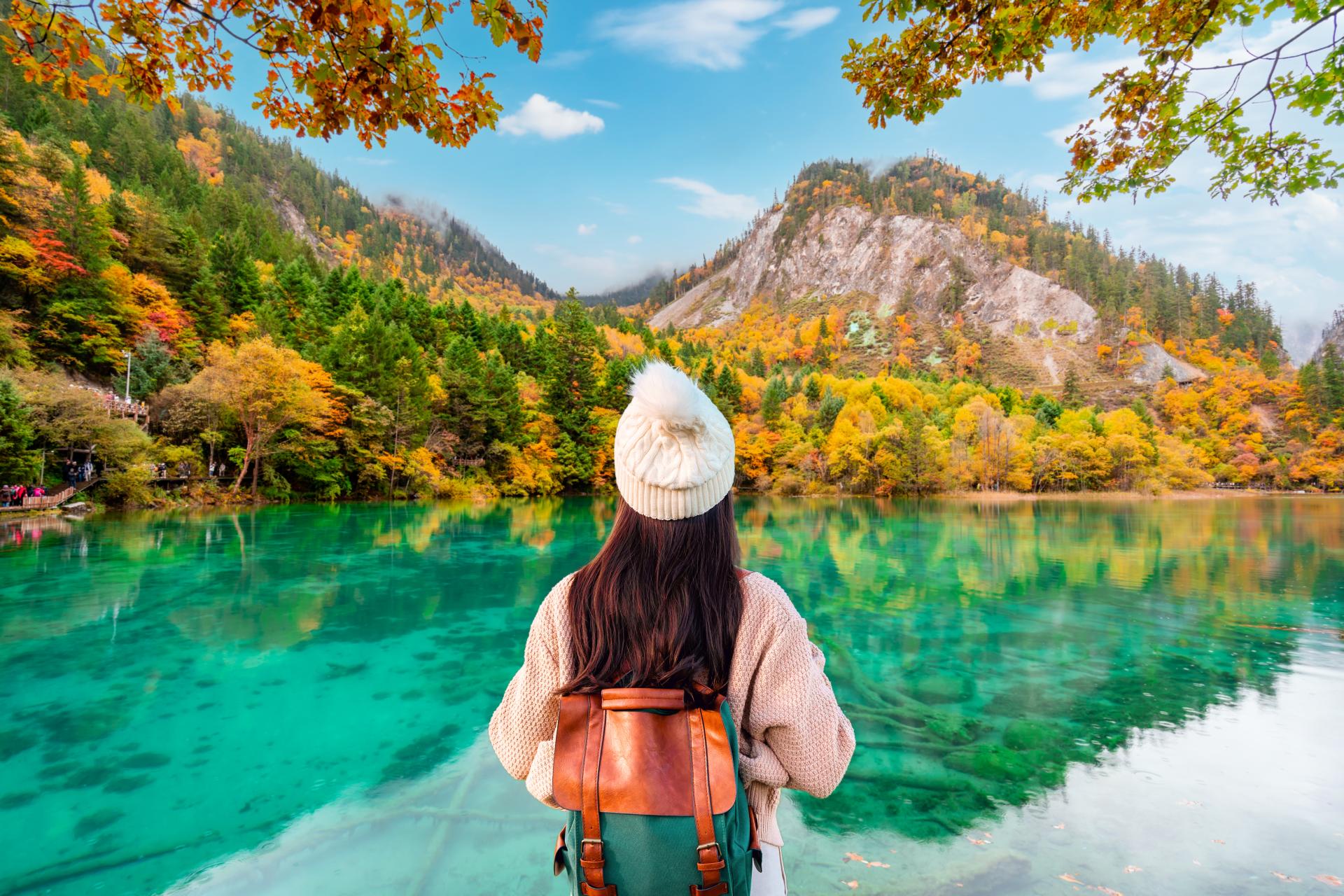
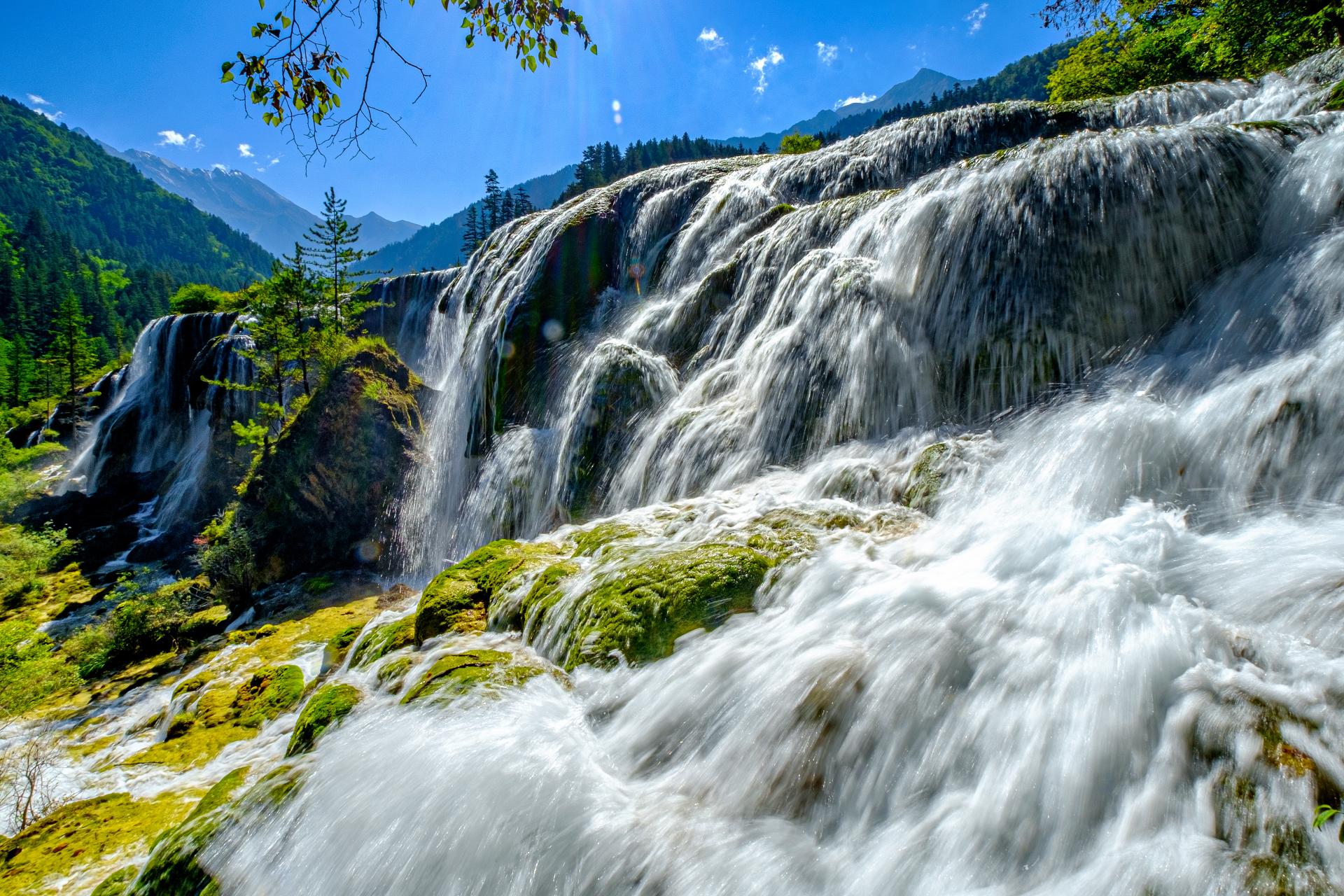
Rize Valley: This valley showcases a series of natural wonders, including the Virgin Forest, the Sea of Arrow Bamboo, the Panda Sea, the Five-Flower Lake, and the Pearl Shoal Waterfall. Among them, the Five-Flower Lake is hailed as a "must-see in Jiuzhaigou" for its mineral-rich waters that shimmer in turquoise, emerald, and sapphire. Meanwhile, the Pearl Shoal Waterfall, with its cascading torrents and dramatic presence, was a filming location for the classic TV series "Journey to the West."
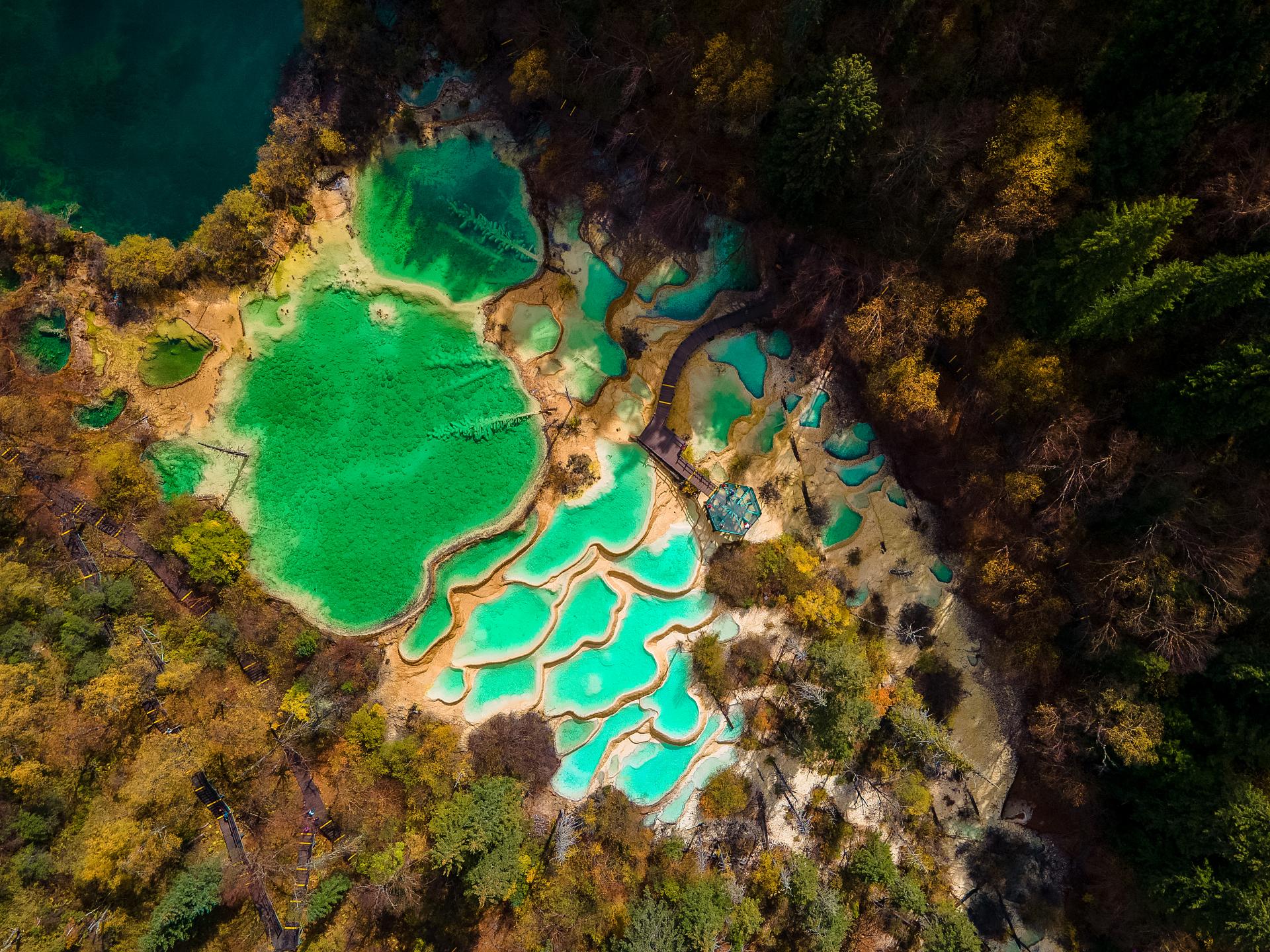
Zechawa Valley: The main attractions include Long Lake (Changhai) and the Five Colored Pool.
As the largest and deepest lake in Jiuzhaigou, Long Lake stretches seemingly without end, its surface mirroring the surrounding snow‑capped peaks. In contrast, the Five Colored Pool, though the smallest pond in the area, is mesmerizing—its crystal-clear waters reveal a kaleidoscope of colors in sunlight.
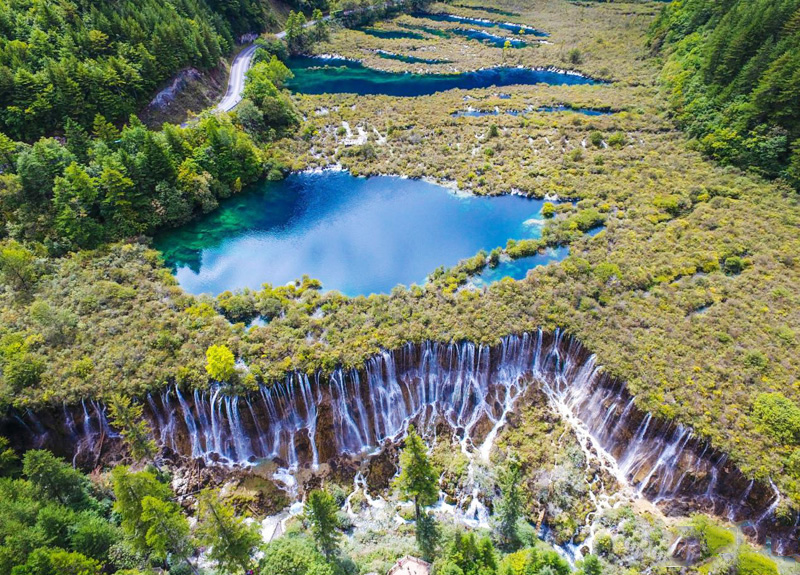
Shuzheng Valley: This valley features a series of interconnected lakes, including the Shuzheng Lakes (19 lakes of varying sizes), the Shuzheng Waterfall, and the Nuorilang Waterfall. The Nuorilang Waterfall, in particular, is notable as the widest calcified waterfall in China, where water cascades in tiers like countless white ceremonial scarves (khatas) fluttering in the wind.
Best time to visit
Jiuzhaigou is stunning year-round, but autumn is the ideal season to visit. During this time, the valley becomes a vibrant canvas, with forest reflections shimmering in the crystal-clear lakes—a sight often described as stepping into a painting.
Precautions
1. Jiuzhaigou sits at high elevation, so some visitors may experience altitude sickness. To prevent discomfort, it is recommended to take preventive measures in advance and avoid intense physical activity upon arrival.
2. Smoking and open flames are strictly prohibited within the scenic area.
3. Daytime and nighttime temperatures vary significantly, so be sure to carry warm clothes for sudden weather changes.