
 English


 Published: November 27, 2025
 Editor: Ruoxi
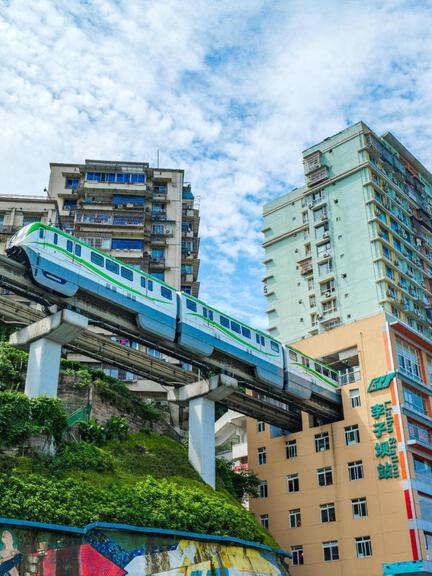
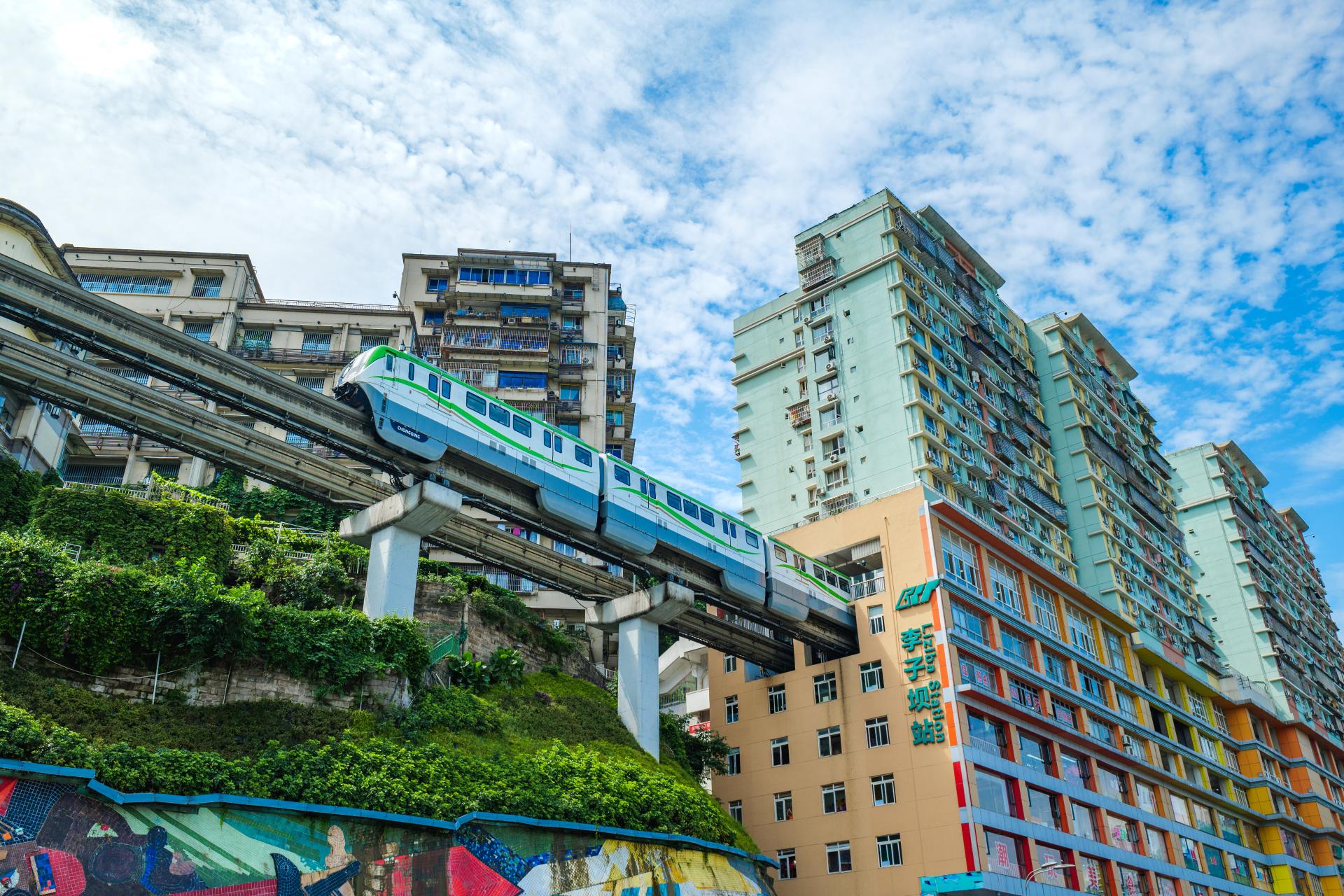
Nestled in the mountainous metropolis of Chongqing, China, lies an urban spectacle rarely seen anywhere else: the Liziba "Through-Building Monorail." Far more than just a convenient transit hub, Liziba Station is an architectural marvel seamlessly woven into the fabric of daily life. Since its inauguration in 2004, the Liziba station—which is integrated harmoniously with a mixed-use residential and commercial building—has become an internet sensation and a must-see spot, drawing countless visitors from around the globe eager to witness the overhead train passing right through the structure.
Best Viewing Spot
For the ultimate view, head to the viewing platform that Chongqing built for tourists, which covers about 1,500 square meters. After leaving the Liziba Station through Exit 1, you can either enjoy a leisurely descent down the stairs or take the elevator straight to the ground level. The platform is directly across the street, providing an unbeatable angle for snapping pictures of the train as it enters and exits the building.

You might be wondering: Do the residents inside feel the vibrations when the train passes through? The answer lies in the engineering design—
The "Station-Bridge Separation" Structure: This design completely isolates the railway tracks from the building's main structure, ensuring zero interference, with each bearing its own independent load. The track system is supported by six separate foundation piles, each driven approximately 22 meters deep directly into the bedrock. Furthermore, a 20-centimeter safety gap is maintained between the track support pillars and the building's structure.
Cutting-Edge Vibration and Noise Reduction Technology: The monorail system employs straddle-type trains that use unique air-filled rubber tires instead of conventional steel wheels, significantly minimizing vibration. The vehicles are equipped with an air spring support system, which acts like a "cushion" to absorb bumps and impacts during transit. Elastic fasteners are used on the track to further isolate the transmission of vibrations. Operational noise is meticulously controlled, staying within the 45–60 decibel range, which is considerably lower than the average sound level of main urban traffic arteries (75.8 dB).
How to Get a Perfect "Swallowing-the-Train" Photo
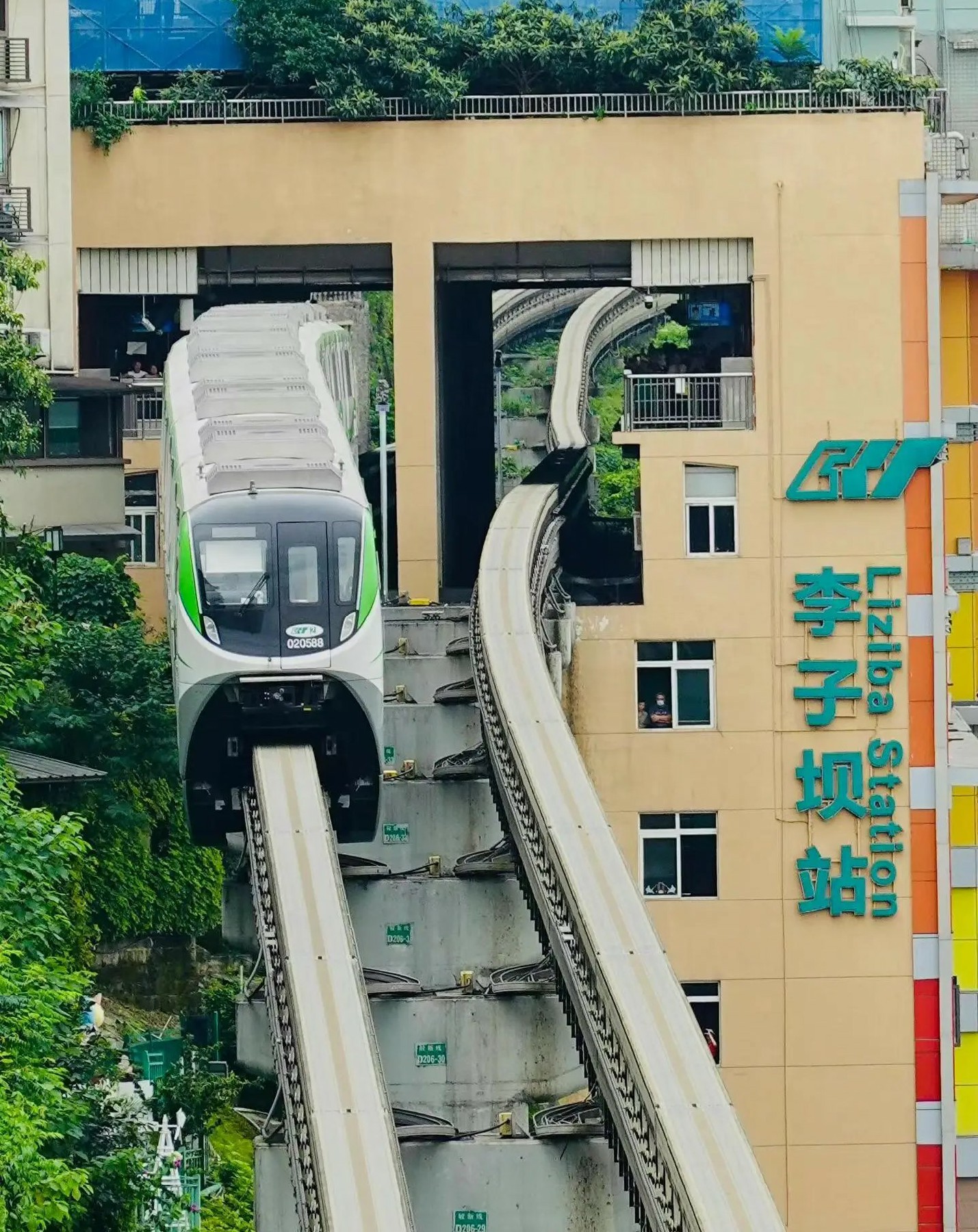
Line up your camera angle just right, then hit the shutter button precisely when the light rail overhead train "spits out" of the building. That's how you capture this truly unique and funny photograph.