
 English


 Published: February 10, 2026
 Editor: Xinxin
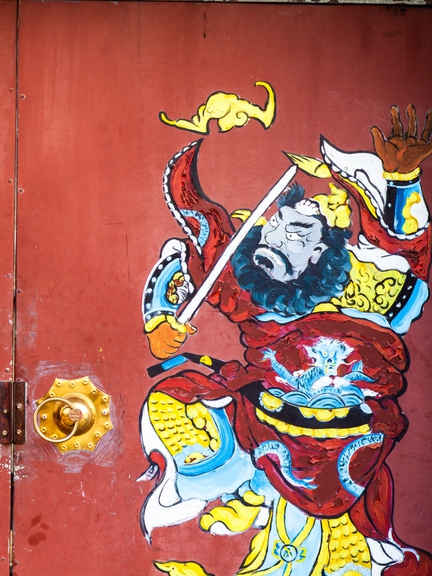
Door Gods are deities who guard doorways in Chinese folk beliefs. Their images are often depicted on New Year prints and pasted on main doors, symbolizing the protection of the household and domestic peace. Pasting Door Gods is one of the traditional customs of the Spring Festival.
According to historical records, rituals of "door worship" already existed during the Zhou Dynasty (1046-256 BCE) and were among the most important ceremonial practices of the time. People of all social classes, from the emperor to commoners, performed rites to show reverence for the Door Gods.
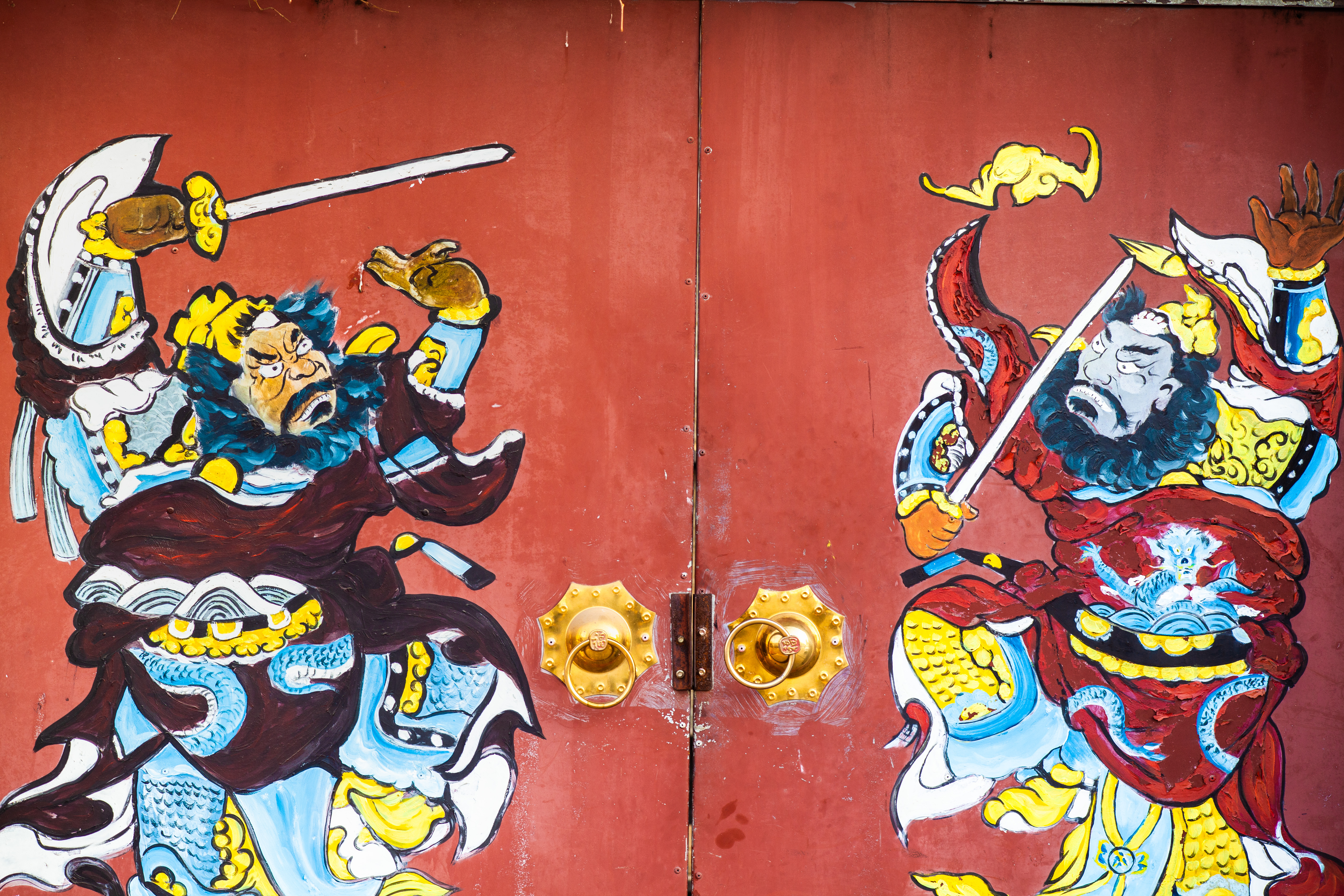
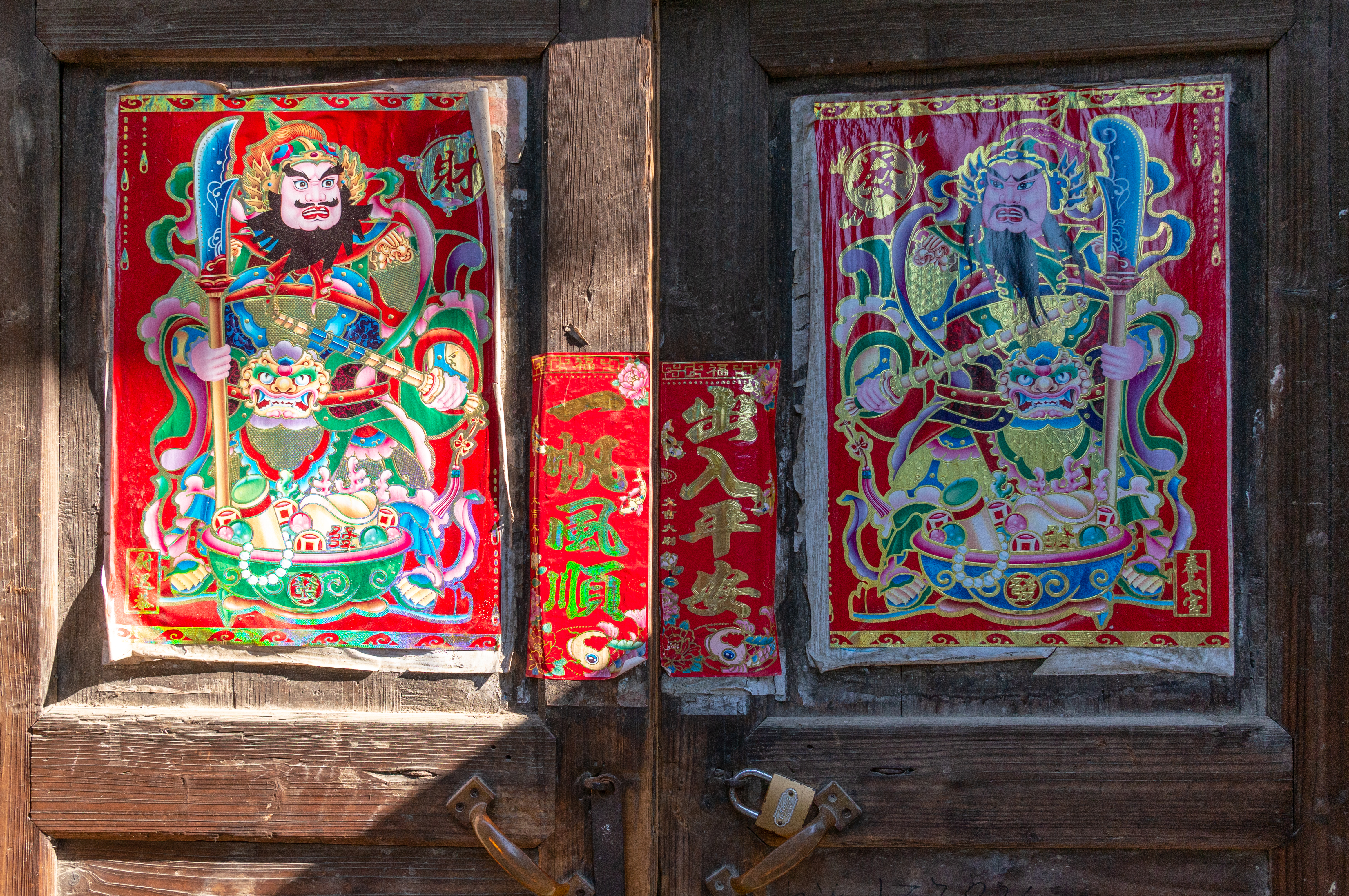
Traditional Door Gods are mostly made of peach wood prints, with well-known production centers including Yangliuqing and Weifang. When pasting them, the figures should be placed facing each other, following established convention. Door God paintings are colorful and diverse; some wear tiger-headed helmets, while others are dressed in ceremonial robes. The New Year prints are also adorned with auspicious patterns like deer (symbolizing rank), bats (symbolizing happiness), precious horses, and vases and saddles (symbolizing peace) to pray for good fortune. Over time, Door God imagery has developed into several categories, including martial generals, civil officials, and deities associated with blessings and protection.
Categories of Door Gods
Evil-Repelling Door Gods
These typically feature the legendary figures Shen Shu and Yu Lv, sometimes accompanied by motifs such as golden roosters and tigers.
Blessing-Oriented Door Gods
These include images of the Three Star Deities, Fu (Blessing), Lu (Prosperity), and Shou (Longevity), posted on the door to invite good fortune.
Ancient Door Gods, in addition to repelling evil spirits and guarding the household, later also evolved to include fortune-bestowing Door Gods, believed to bring success, fame, wealth, and longevity. People paste the Civil God of Wealth and Martial Gods of Wealth on the left and right doors respectively, signifying "attracting wealth from the left" and "bringing in treasure from the right."
Such Door Gods are not intended as protectors of the doorway, but are used specifically for blessing, with the central figure being the Heavenly Official Who Bestows Blessings. Families engaged in commerce or trade commonly post these images in the hope of gaining wealth, status, and prosperity.
Martial Door Gods
Martial Door Gods are usually pasted on street-facing main doors. To prevent evil spirits or inauspicious forces from entering through the gate, such Door Gods often depicted holding weapons.
Civil Door Gods
These typically depict civil officials dressed in court robes.
In China, the practice of using civil officials as Door Gods is relatively uncommon. Among the most famous are Wei Zheng, Bao Gong (Bao Zheng), Hai Rui, and Wen Tianxiang.
Among them, Bao Gong also known as Bao Zheng, is deeply revered by the ordinary people for his integrity, strict enforcement of the law, and fearlessness in the face of powerful officials, having a far-reaching influence in folk culture. In various artistic works, he is presented with a stern black face, giving him an especially imposing presence.
Beautiful Symbolism
The custom of pasting Door Gods on household doors during the Spring Festival has been passed down for thousands of years. During the Spring Festival, people paste and make offerings to Door Gods at their main entrances to ward off evil spirits, guard the household, and ensure peace.