
 English


 Published: January 27, 2026
 Editor: Cao Xuewen
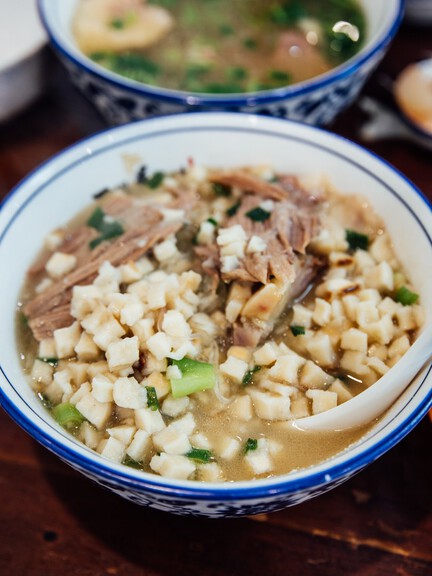
Yangrou paomo traces its origins back to the Western Zhou period and was known in ancient times as "yang geng (lamb stew)." With tender meat, a rich and hearty broth, chewy flatbread, and an enticing aroma, it is a traditional specialty of the Guanzhong region in Shaanxi.
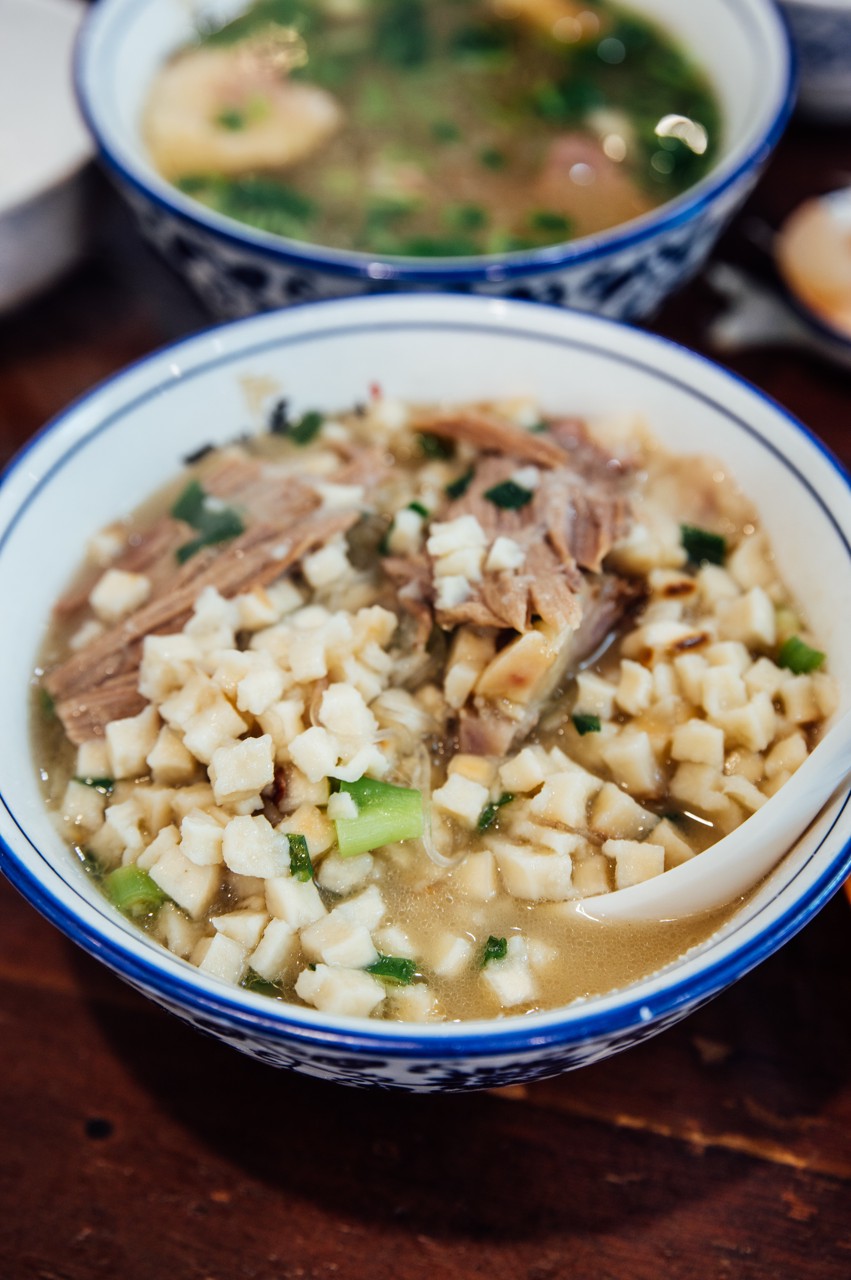
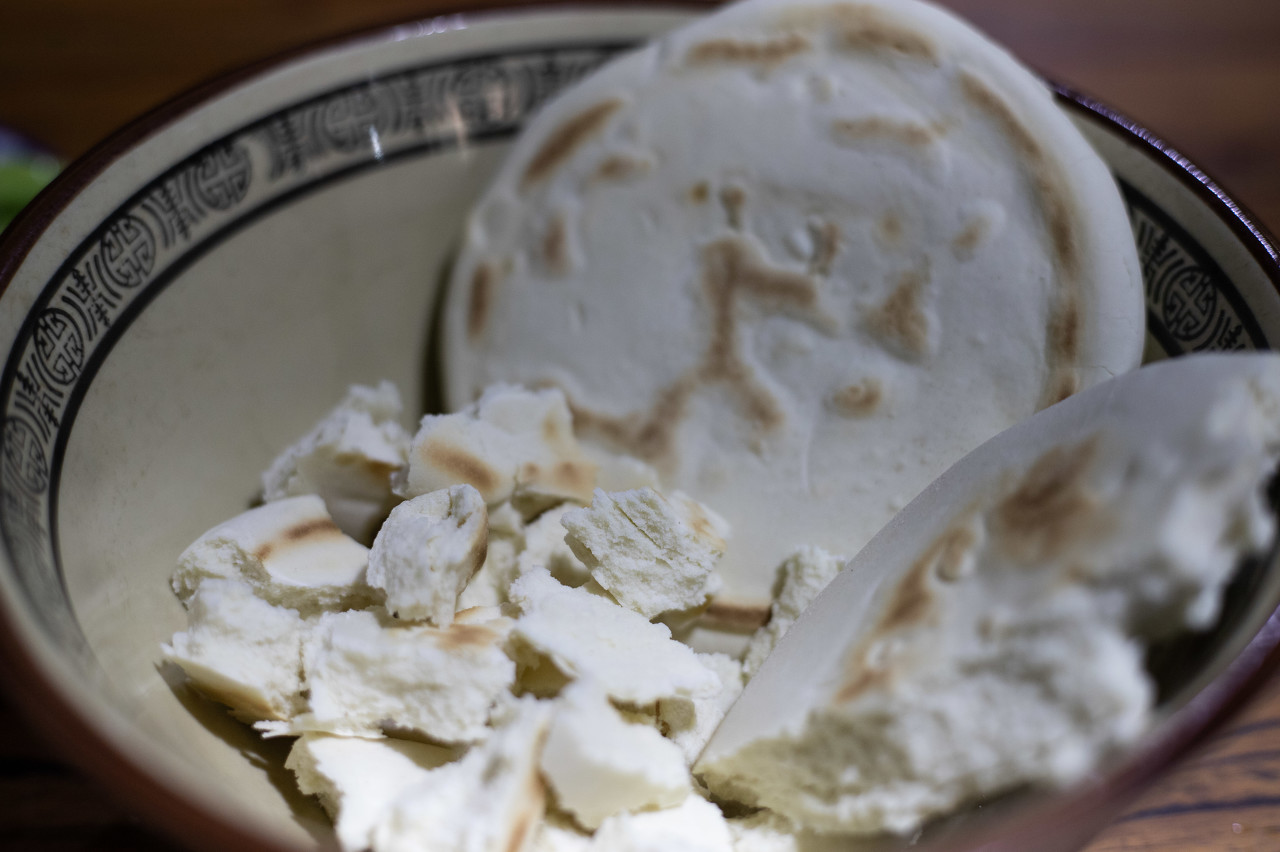
Eating yangrou paomo emphasizes "can shi," or slow, deliberate tasting. The flatbread must be torn by hand into pieces about the size of soybeans; the more evenly torn, the better it absorbs the flavor. When eating, one starts gradually from the edge of the bowl. The golden, fragrant broth, the flatbread that is soft on the outside yet chewy inside, paired with smooth glass noodles, garlic sprouts, cilantro, and sweet pickled garlic, creates a dish that is rich yet not greasy, with layered flavors.
There are four traditional styles of preparing yangrou paomo: dan zou, gan ba, kou tang, and shui wei cheng. Dan zou: The bread and broth are served separately. The bread is torn into the broth while eating, and after finishing, a bowl of clear broth is drunk on its own, each flavor standing apart. Gan ba: When finished, the bowl contains no broth, no bread, and no meat. This style requires the smallest bread pieces and the least amount of broth. Kou tang: After eating the paomo, only one mouthful of broth remains, with a moderate amount of liquid. Shui wei cheng: The bread pieces sit in the center with broth surrounding them. This style calls for the largest bread pieces and the most broth.
For people in Shaanxi, Yangrou paomo is a vivid emblem of local food culture and also an emotional touchstone. If you visit Xi'an, Yangrou paomo at long-established restaurants such as Tongshengxiang and Lao Sunjia Restaurant is well worth trying. Founded in 1920, Tongshengxiang's beef and Yangrou paomo-making technique was added to the national intangible cultural heritage list in 2008.