
 English


 Published: November 28, 2025
 Editor: Qingyu
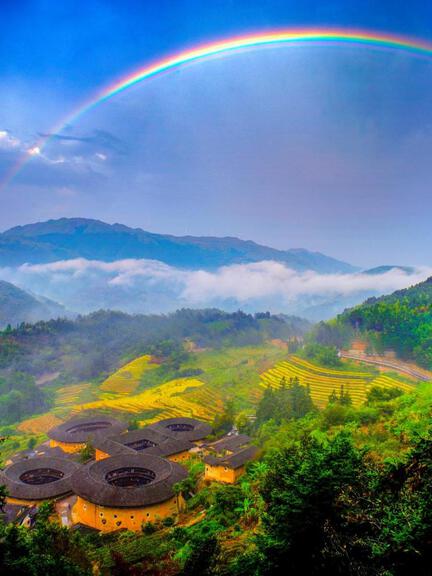
Constructed between the 15th and the 20th centuries, Fujian Earthen Buildings are found across Nanjing and Hua’an counties in Zhangzhou City, and Yongding District in Longyan City. This remarkable heritage comprises of 46 earthen structures. Built of rammed earth, these fortified communal dwellings served both as robust defensive bastions and as the ancestral homes of entire clans over generations. Most earthen buildings rise several stories high and take the form of circles, squares, or layouts shaped by the surrounding mountains and streams, reflecting the traditional Chinese philosophy of “harmony between humanity and nature”.
Featured Earthen Buildings
Chengqi Building - The Earthen Building Featured on a Postage Stamp
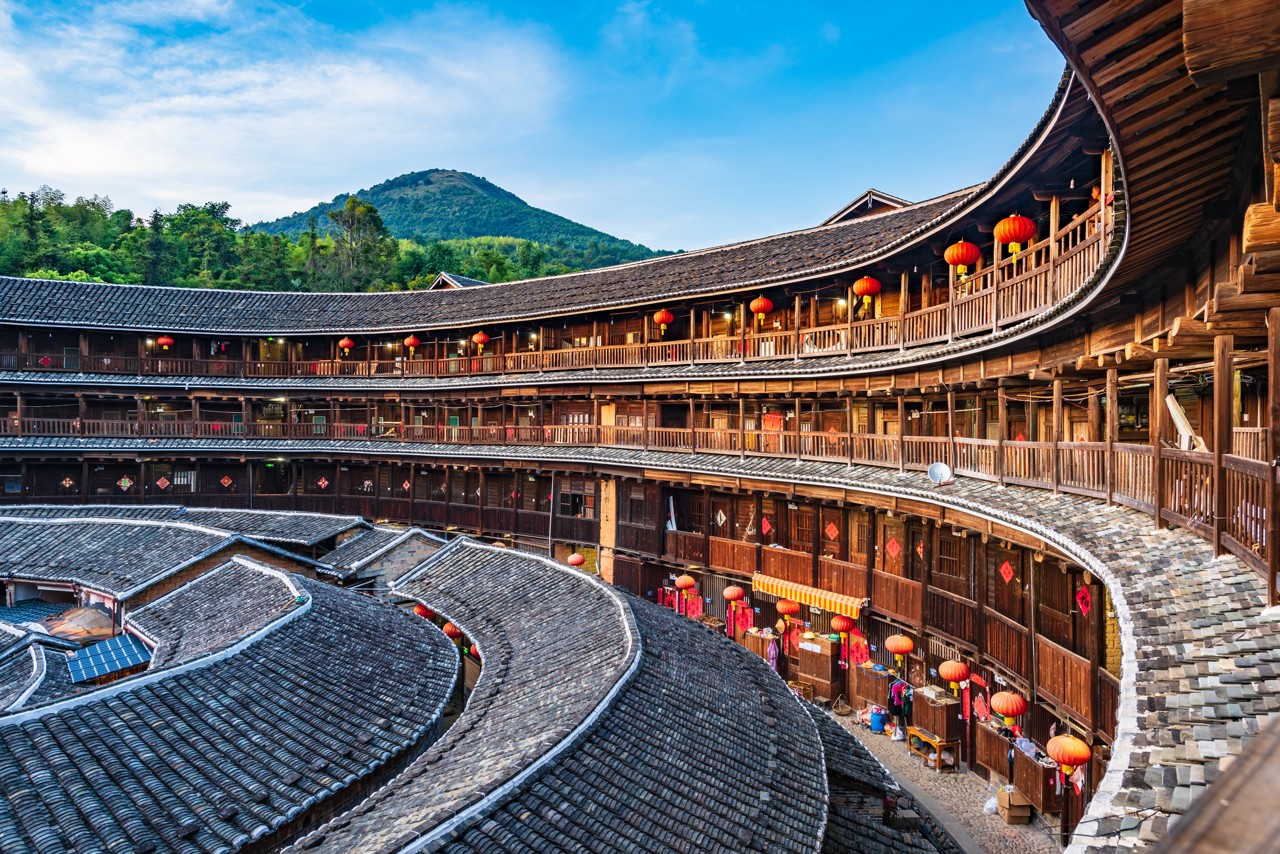
Located in the Gaobei Earthen Buildings Cluster of Yongding, ChengqiBuilding, often hailed as the “King of Earthen Buildings”, is an essential highlight for visitors. A popular local saying describes it vividly, “Four stories high, built in four concentric rings, with more than four hundred rooms above and below; Circles within circles, courtyards within courtyards, standing strong for four centuries.”
Chengqi Building is distinguished by its three concentric rings of living quarters encircling a central ancestral hall. With more than 370 rooms of equal size, the structure breaks from the traditional hierarchical norms of ancient Chinese residential design.
In 1986, the Ministry of Posts and Telecommunications of China issued a series of stamps titled “Traditional Chinese Dwellings”. The one-yuan stamp featured the interconnected rings of Chengqi Building, instantly making it an iconic symbol of Fujian Earthen Buildings to the world.
Location: Hongkeng Village, Hukeng Town, Yongding District, Longyan City, Fujian Province
Ticket Information: RMB 50 (includes admission to Zhencheng Building, Kuiju Building, Fuyu Building, and Rusheng Building)
Tianluokeng Earthen Building Cluster - The “Four Dishes and One Soup” of Tulou
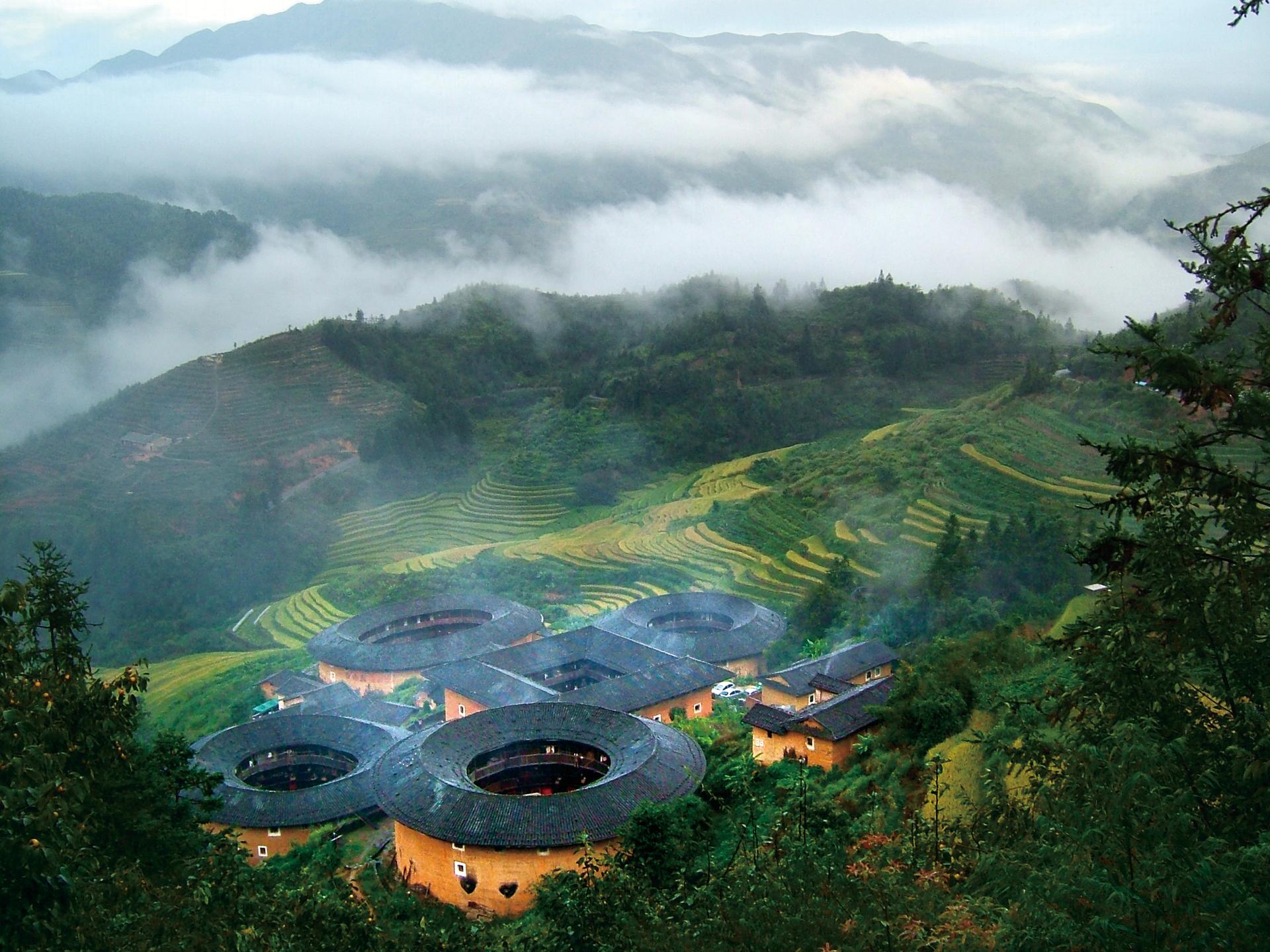
The Tianluokeng Earthen Building Cluster was built according to the generative sequence of the Five Elements, “metal, wood, water, fire, and earth”. It consists of the square Buyun Building; the circular Zhenchang Building, Ruiyun Building, and Hechang Building; and the oval Wenchang Building.
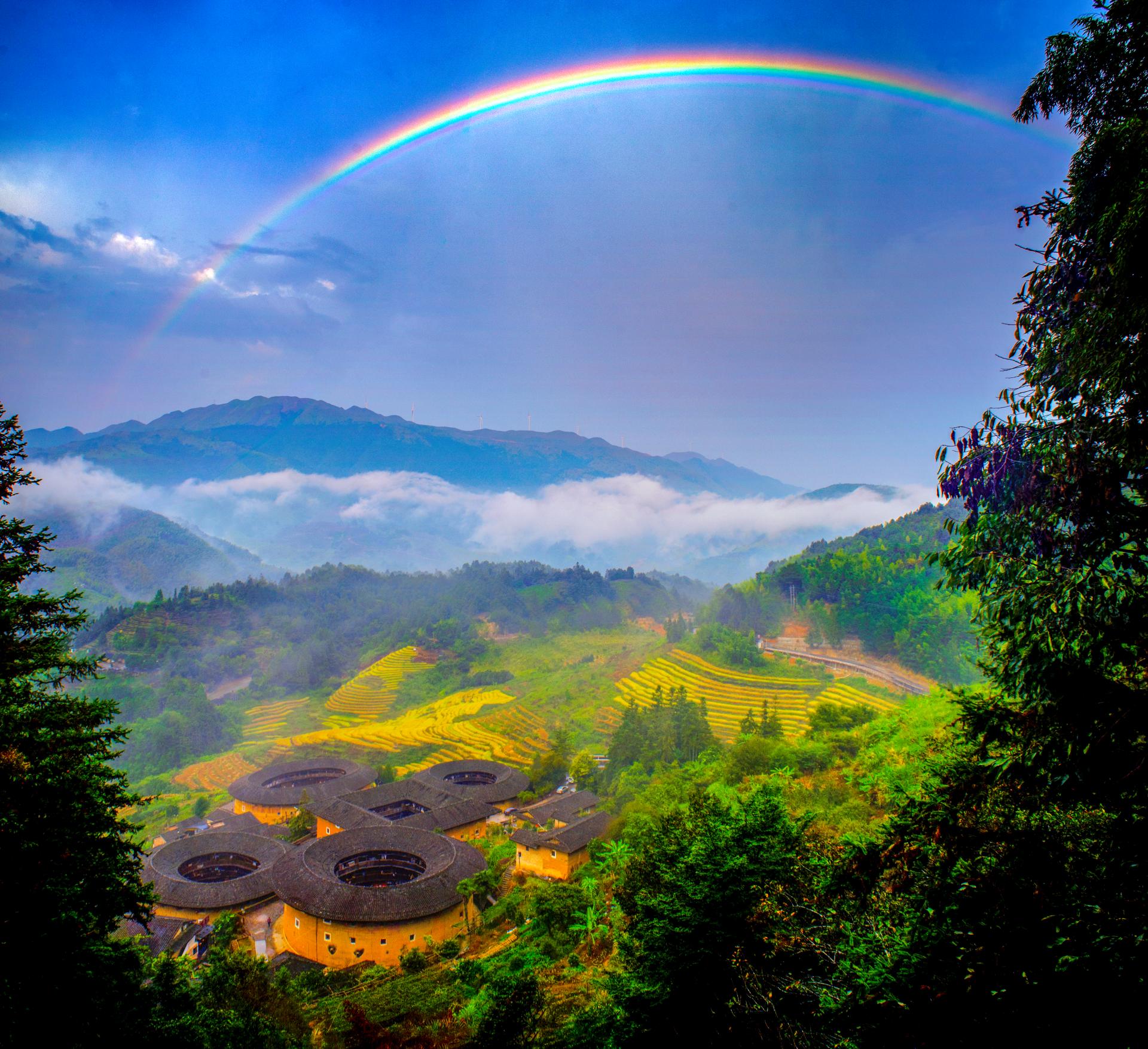
The square Buyun Building at the center is embraced by four circular earthen buildings. Because the cluster looks different from the upper and lower viewing platforms, visitors affectionately nickname it “Four Dishes and One Soup” when viewed from above, and “Little Potala” when seen from below.

Location: Tianluokeng Scenic Area, Nanjing County, Zhangzhou City, Fujian Province
Ticket Information: A combined ticket for Tianluokeng Earthen Building Cluster, Yuchang Building, and Taxia Village is RMB 100.
Yuchang Building - The “Leaning Tower of Pisa of the East”
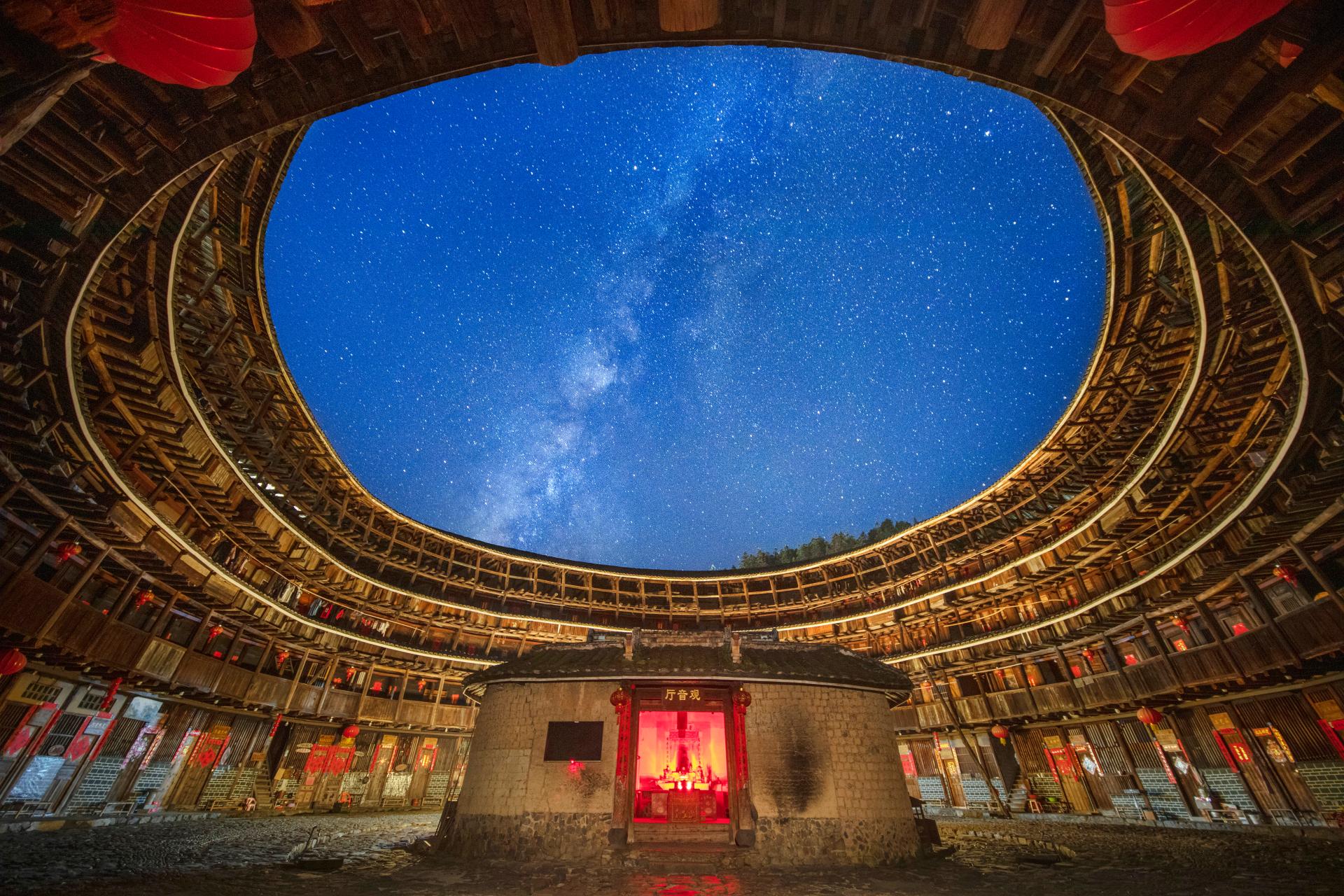
Yuchang Building, one of the oldest earthen building, began construction in 1308 during the mid-Yuan dynasty and was completed 30 years later. The building is jointly owned by five families, Liu, Luo, Zhang, Tang, and Fan, and is divided into five residential sections.
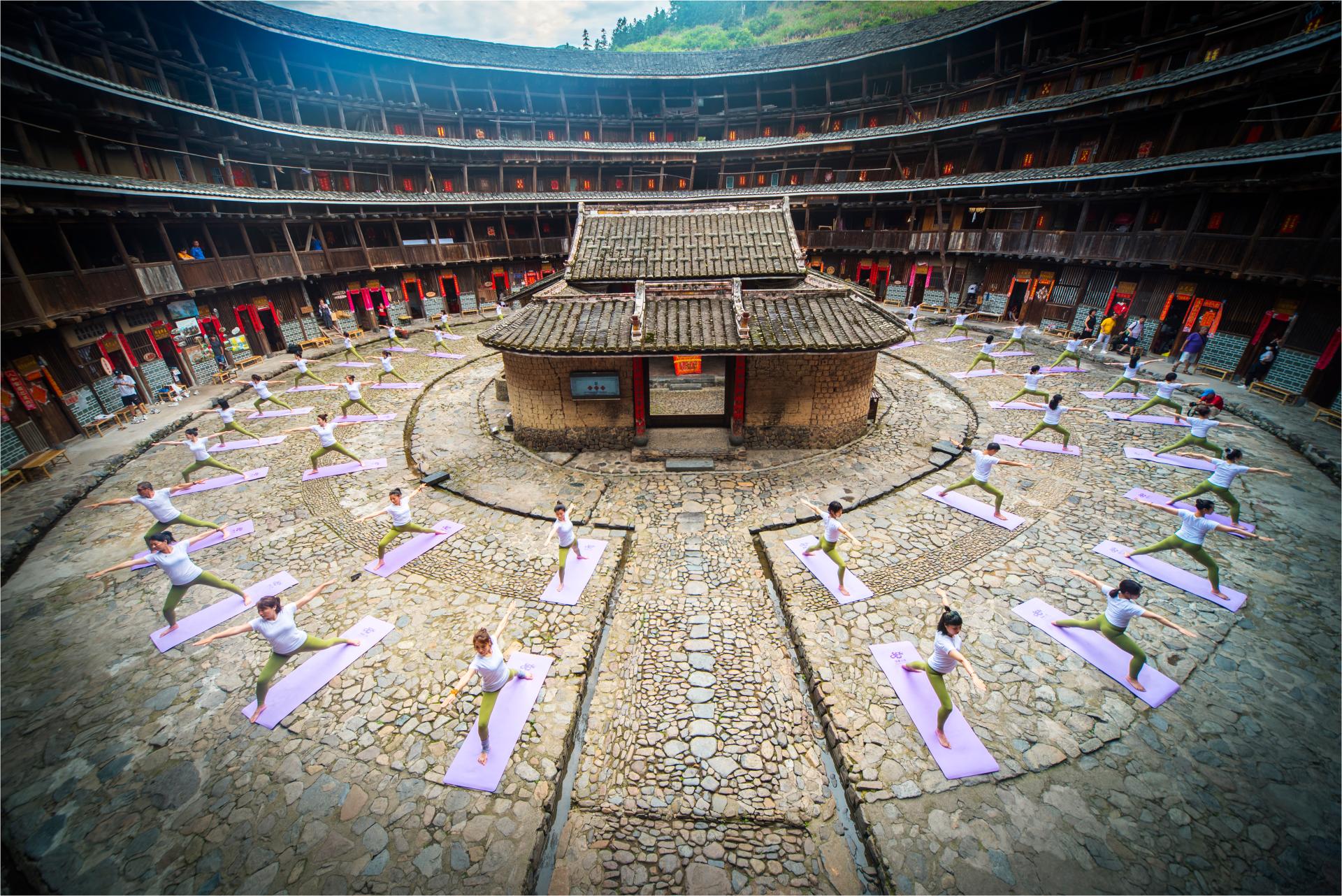
Often referred to as the “zigzag building”, Yuchang Building is famous for its dramatic structural tilt: from the third floor upward, its beams and columns slant noticeably from left to right, reaching an angle of up to 15 degrees. While it may appear as though it could collapse at any moment, this extraordinary structure has withstood more than six centuries of earthquakes and storms, earning the reputation of being “leaning for 700 years yet perpetually steadfast”.
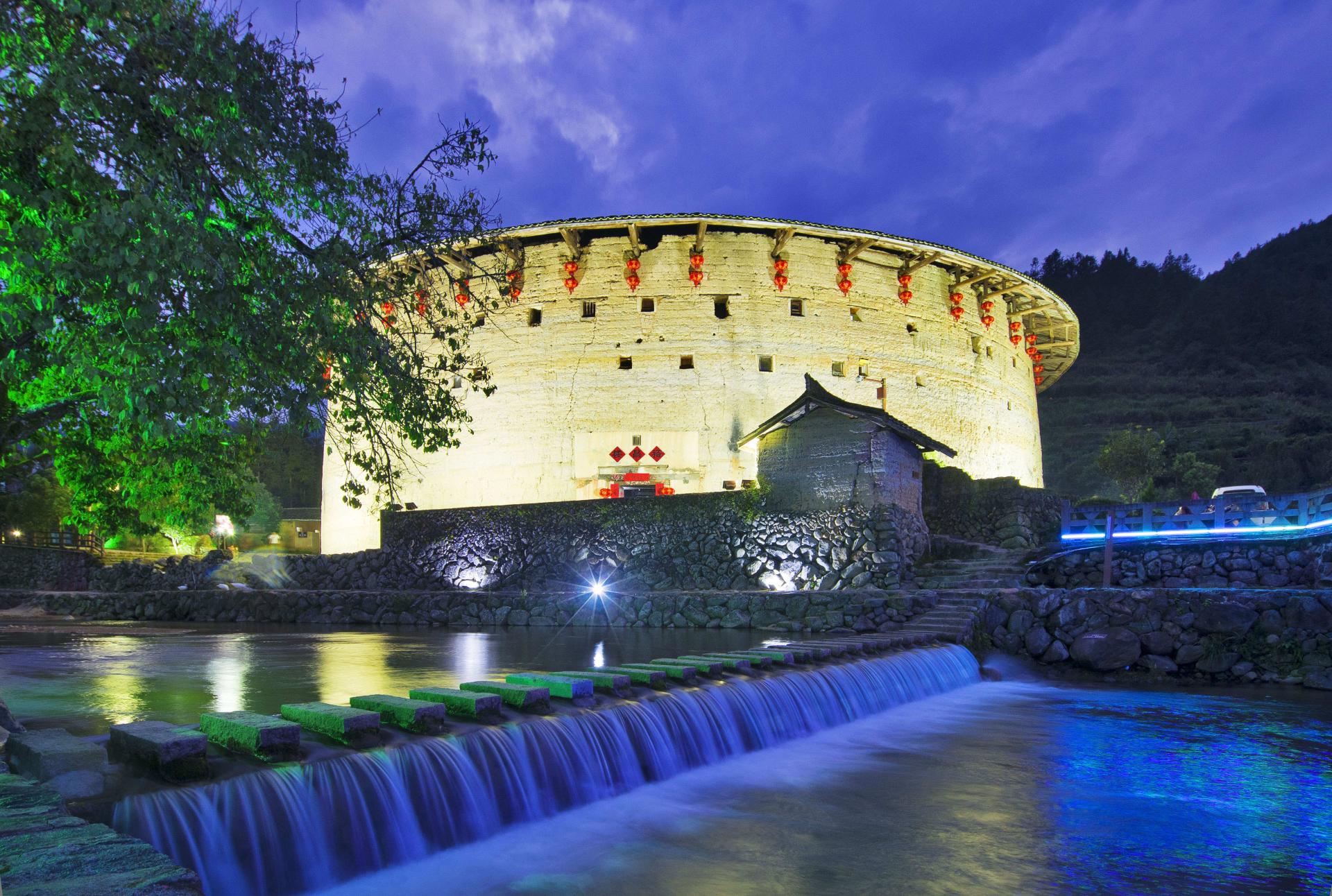
Location: Xiaban Village, Shuyang Town, Nanjing County, Zhangzhou City, Fujian Province
Ticket Information: A combined ticket for Tianluokeng Earthen Building Cluster, Yuchang Building, and Taxia Village is RMB 100.